

Hair Breakage at the Crown: Why It Happens and How to Stop It
You're running your fingers through your hair and the crown feels different. Thinner. Shorter pieces sticking up where there used to be length. Hair breakage at the crown is one of the most common complaints people bring to stylists, and it's almost always a routine problem, not a genetics problem. This post breaks down what causes it, how to tell it apart from shedding, and the specific changes that actually stop it.
Crown breakage happens when the hair at the top of your head snaps from friction, tension, dryness, or mechanical stress. Unlike shedding, which pulls from the root, breakage leaves short, uneven pieces with no bulb at the end. The crown is the most exposed part of your head, which makes it the first place to show damage from styling, heat, UV, or skipping moisture steps.
What Crown Breakage Actually Looks Like
Before you change anything in your routine, make sure you're dealing with breakage and not normal shedding. They look different and they have different fixes.
Breakage means the strand snapped somewhere along its length. You'll see short, uneven pieces, especially around the part line and crown. The broken ends won't have a small white bulb attached. You might also notice frizz, flyaways, or a rough texture when you touch the top of your head.
Shedding is a full strand releasing from the root. It's longer, and if you look closely, there's a tiny white or translucent bulb at one end. Losing 50 to 100 strands a day through shedding is normal.
If you're seeing short broken pieces without bulbs concentrated at the crown, that's breakage. Keep reading.
Why the Crown Breaks More Than the Rest of Your Hair
The crown isn't weaker by nature. It just takes more punishment than any other section of your head.
UV exposure. The crown faces the sun directly. UV radiation degrades the protein structure of the hair shaft over time, making strands more brittle. A 2019 study in the Journal of Photochemistry and Photobiology (opens in a new tab) confirmed that UV-B radiation significantly damages the cuticle layer and reduces hair's tensile strength.
Friction. Every hat, headband, pillowcase, and hand running through your hair hits the crown first. That repeated friction lifts the cuticle and weakens the shaft right where it's most visible.
Tension from styling. Ponytails, buns, clips, and tight parts all pull from the crown. Over time, that constant tension fatigues the strand until it snaps.
Dryness. The crown is the most exposed to environmental drying. If your routine doesn't deliver moisture specifically to that area, the crown dries out faster than the mid-lengths and ends.
The Most Common Causes (and Which One Is Probably Yours)
Most crown breakage comes down to one or two habits. Read through these and be honest about which ones apply.
Heat without protection
Flat irons, blow dryers, and curling tools at high heat damage the cuticle. The crown usually gets the most direct heat because it's the first section people style. If you're using heat regularly without a protectant or on temperatures above 350 degrees F, this is likely a factor.
Tight styles and high ponytails
A ponytail pulled tight at the crown puts constant stress on the same strands every day. Over weeks and months, those strands weaken and snap. The same applies to top knots, claw clips that grip the same spot, and braids that start tight at the crown.
Rough towel drying
Rubbing a terry cloth towel back and forth on the crown lifts the cuticle and creates friction damage. This is one of the easiest habits to fix and one of the most common causes.
Skipping pre-wash moisture
Shampooing dry, unprotected hair strips the crown first because that's where the lather concentrates. Without a pre-wash oil or moisture step, the shampoo removes natural oils and leaves the crown more vulnerable to breakage during and after the wash.
Product buildup
Heavy products that sit on the scalp and crown without proper cleansing create a cycle: buildup leads to dryness underneath, which leads to more breakage. If your crown feels coated but the hair still snaps, buildup is probably part of the picture.
How to Stop Hair Breakage at the Crown
This isn't about buying more products. It's about adjusting the routine you already have.
1. Add a pre-wash oil step
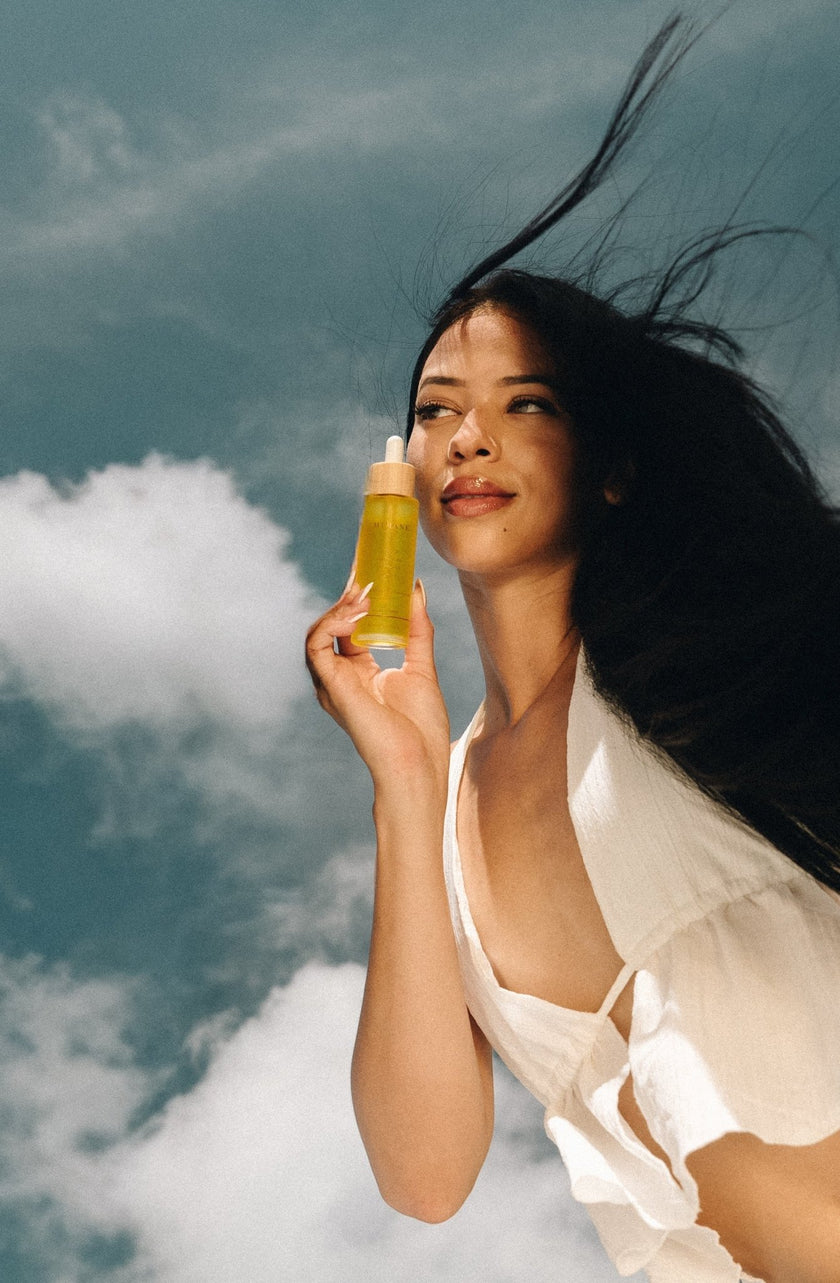
Apply a lightweight oil to the crown and part line before you shampoo. This creates a barrier that prevents the shampoo from stripping too much moisture from the most exposed area. Focus on the crown specifically, not just the ends. Two to three drops, worked into the crown and along the part, is enough. The Growth & Strengthen Hair Oil was designed for exactly this. Jojoba oil mimics the scalp's natural sebum, so it absorbs into the strand instead of sitting on top.
2. Switch to a gentler cleanser
Sulfate-heavy shampoos strip too aggressively for already-damaged hair. A sulfate-free formula that still cleans effectively will remove buildup without adding to the dryness. The Nourish & Strengthen Shampoo uses decyl glucoside and coco glucoside as the primary surfactants, which clean without that squeaky, stripped feeling.
3. Condition with intention at the crown
Most people apply conditioner to their ends and ignore the crown entirely. Flip that. The crown needs conditioning just as much, sometimes more. Apply conditioner from the crown down, let it sit for two to three minutes, and then rinse. Pair it with the Nourish & Strengthen Conditioner for a wash day that covers both cleansing and moisture in the right order.
4. Stop rubbing with a towel
Switch to a microfiber towel or an old cotton t-shirt. Scrunch or blot instead of rubbing. This single change reduces friction on the crown dramatically. It's free and it works immediately.
5. Rotate your tension points
If you wear ponytails, change the position every few days. Alternate between clips, loose braids, and low buns so the same section of the crown isn't bearing the tension constantly. Give the crown a break.
6. Lower the heat
If you use heat tools, bring the temperature down to 300 to 325 degrees F and always use a heat protectant. Limit direct heat on the crown to once or twice a week maximum. Air drying the crown while using heat only on the lengths and ends makes a noticeable difference.
Why Mimane Glow's Pre-Wash Oil Step Targets Crown Breakage
We built the Growth & Strengthen Hair Oil around ingredients that specifically address what causes crown breakage: dryness, weakened strands, and poor scalp circulation.
Jojoba oil has a molecular structure similar to human sebum. It doesn't coat the hair. It absorbs into the shaft, which is why it works as a pre-wash barrier without leaving residue or weighing the crown down.
Pumpkin seed oil is high in zinc and fatty acids that support hair strength. It's not a trendy addition. It's in the formula because the research on pumpkin seed oil and hair retention is solid.
Rosemary oil supports circulation at the scalp. The crown, being the highest point on the head, benefits from improved blood flow to the follicles. This is why we included it rather than a purely cosmetic essential oil.
The pre-wash oil step is the single biggest routine change for crown breakage because it protects the most vulnerable area before the most stripping step in your wash day. If you want the full wash-day system, the Glow Kit includes the oil, shampoo, and conditioner together.
What to Expect When You Fix the Routine
Crown breakage didn't happen in a day and it won't resolve in one wash. Here's a realistic timeline.
After 1 to 2 wash days: The crown should feel less dry and rough to the touch. You might notice fewer flyaways and less of that "crunchy" texture at the top.
After 2 to 3 weeks: The short broken pieces are still there, but new breakage slows down significantly. The crown starts to feel more consistent with the rest of your hair.
After 6 to 8 weeks: The broken pieces grow out enough to start blending back in. The crown holds moisture better between wash days. This is when most people really see the difference.
Consistency matters more than intensity. A simple routine done every wash day beats an elaborate one done once a month.
When to See a Dermatologist Instead
Routine changes fix most crown breakage. But there are situations where the issue goes deeper.
See a dermatologist if you notice actual bald patches at the crown, not just thinner areas. If there's redness, flaking, itching, or pain at the scalp, that could point to a condition like alopecia, a fungal infection, or dermatitis that needs medical treatment.
If you've adjusted your routine for 8 to 12 weeks and the breakage hasn't improved at all, that's also worth a professional look. A dermatologist can rule out hormonal factors, nutritional deficiencies, or scalp conditions that no topical routine will fix on its own.
No hair product replaces medical advice. If the crown breakage feels unusual or sudden, get it checked.
The pre-wash oil step is the easiest place to start. If your crown is breaking, protecting it before your shampoo changes the game. Try adding the Growth & Strengthen Hair Oil to your next wash day and see what your crown feels like after two weeks.