

Why Is My Hair Still Dry After Washing? Here's What's Actually Going On
You just finished a full wash day. Shampooed, conditioned, did everything you were supposed to do. And your hair still feels dry, stiff, or rough before it even finishes air-drying. That's frustrating, and it's one of the most common hair complaints out there. This post breaks down what's actually causing it and how to fix it, whether your hair is straight, wavy, curly, or coily.
Quick answer: Hair that feels dry after washing is almost always a routine issue, not a product issue. The most common culprits are hot water, harsh sulfates stripping moisture, rushing through conditioner, not sealing moisture into the hair shaft after rinsing, and washing too often. Fixing even one of these usually makes a noticeable difference within one or two wash days.
It's Usually the Routine, Not the Products
The instinct when your hair feels dry is to switch products. New shampoo, new conditioner, maybe a mask or a leave-in on top of it. But most of the time, the products aren't the problem. The process is.
Think of it this way: your hair can only hold onto moisture if the steps around it actually let that happen. If your water is too hot, your cleanser is too harsh, or you're rinsing conditioner out too fast, it doesn't matter how good the formula is. The moisture never gets a chance to stay.
Before you overhaul your entire routine, look at the basics first. That's where the fix usually is.
5 Reasons Your Hair Still Feels Dry After Washing
1. Your water is too hot
Hot water opens the hair cuticle wide, which is fine for cleansing. But if you're rinsing conditioner with the same hot water, you're stripping out the moisture you just put in. The cuticle stays lifted, and moisture escapes before your hair even dries.
The fix: wash with warm water, and do your final conditioner rinse with cool or lukewarm water. That helps the cuticle lay flat and lock in what the conditioner deposited.
2. Your shampoo contains sulfates
Sulfates (sodium lauryl sulfate, sodium laureth sulfate) are aggressive detergents. They clean well, but they also strip the hair's natural oils along with the dirt. If your hair consistently feels "squeaky clean" after shampooing, that tightness is your hair telling you it's been over-cleansed.
Sulfate-free cleansers like decyl glucoside and coco glucoside (the surfactants in the Nourish & Strengthen Shampoo) clean effectively without stripping. A 2019 study published in the International Journal of Trichology (opens in a new tab) found that sulfate-free shampoos significantly reduced protein loss in hair compared to sulfate-based formulas. That matters because protein loss is directly linked to dryness and breakage.
3. You're rushing through conditioner
Conditioner needs contact time to actually work. Most people apply it and rinse it out within 30 seconds. That's not enough time for the conditioning agents to penetrate the hair shaft.
Apply conditioner from mid-length to ends, gently work it through with your fingers or a wide-tooth comb, and leave it on for at least 3 to 5 minutes. If you're short on time, apply it first thing in the shower and rinse it last. That alone can change how your hair feels when it dries. If the formula itself is the weak link, our guide to choosing a conditioner for dry natural hair covers what to look for.
4. You're not sealing moisture after washing
This is the step most people skip entirely. Conditioner deposits moisture, but if you don't seal the cuticle afterward, that moisture evaporates as your hair dries. This is especially true in dry climates or during colder months when indoor heating pulls moisture from your hair.
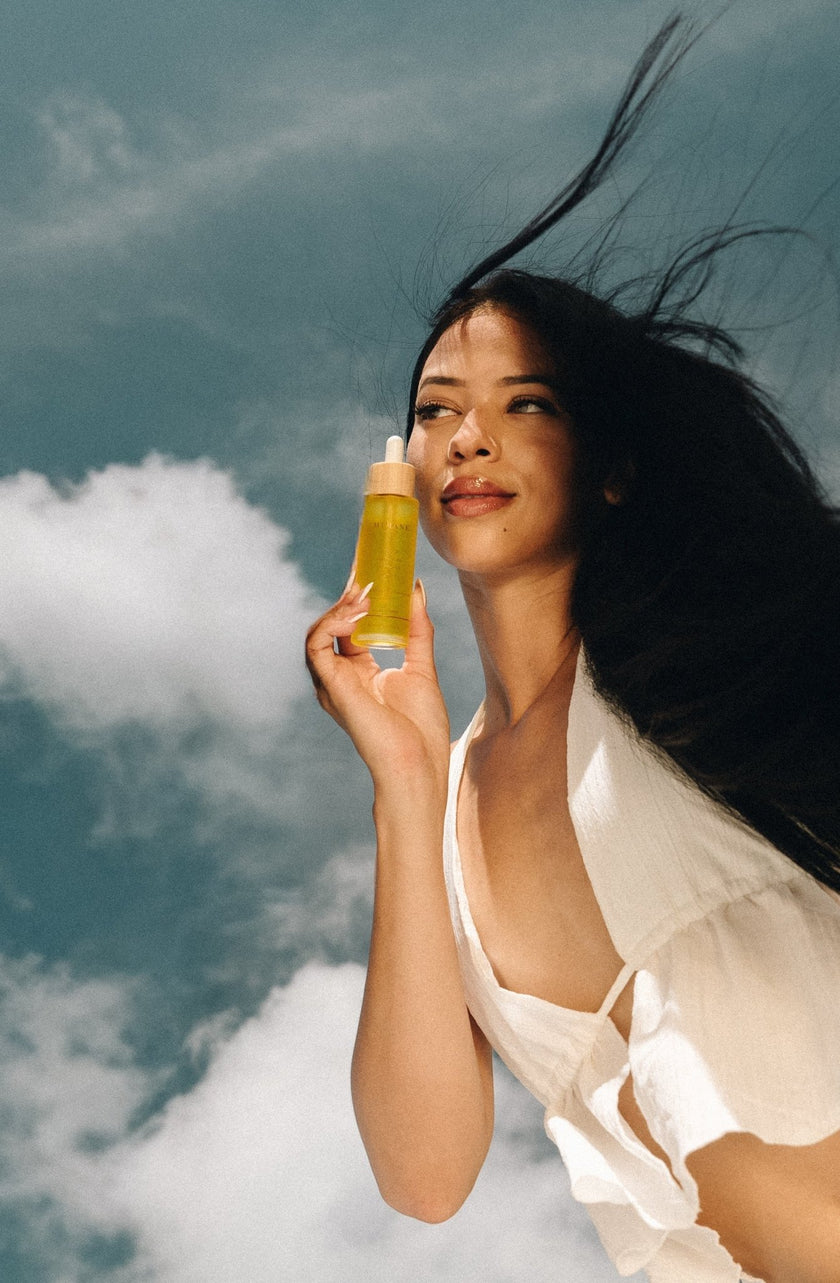
Sealing means applying a light oil or leave-in to damp hair right after washing, while the cuticle is still slightly open and can absorb it. Something like the Growth & Strengthen Hair Oil works here because the jojoba and squalane in the formula mimic the hair's natural sebum. They absorb into the shaft instead of just sitting on top.
5. You're washing too often
Every wash cycle strips some natural oil from your hair and scalp. If you're shampooing daily or even every other day, your hair never has a chance to rebuild its moisture balance.
For most hair types, 2 to 3 washes per week is plenty. If your scalp gets oily between washes, try rinsing with water only on off-days, or use a lighter co-wash instead of a full shampoo. Your hair will adjust over a week or two.
How to Prevent Dry Hair After Shampooing
Once you've identified which of the five issues above applies to you, here's the adjusted routine:
Before washing: Apply a small amount of oil to dry hair, focusing on the ends and any areas prone to dryness. Let it sit for 15 to 30 minutes (or overnight if you have time). This creates a protective layer so the shampoo doesn't strip as aggressively. This is where a pre-wash oil treatment makes the biggest difference, especially for hair that's naturally dry or porous.
During washing: Use a sulfate-free shampoo. Focus it on the scalp, not the lengths. Let the lather run down through the rest of your hair as you rinse. That's enough to clean mid-lengths and ends without over-stripping them.
Conditioning: Apply the Nourish & Strengthen Conditioner from mid-length to ends. Comb it through gently. Leave it on for 3 to 5 minutes minimum. Rinse with cool water.
After washing: While your hair is still damp (not dripping, not dry), apply a few drops of oil to seal. Scrunch it in for wavy and curly types, or smooth it down for straighter textures. This is the step that keeps your hair feeling soft hours after it dries.
Why Mimane Glow Built the Nourish & Strengthen Line Around This Problem
When we developed the Nourish & Strengthen Shampoo and Conditioner, post-wash dryness was the specific problem we wanted to solve.
The shampoo uses gentle plant-derived surfactants (decyl glucoside and coco glucoside) instead of sulfates. It also contains glycerin and aloe vera juice, both humectants that help hair hold onto water during the wash itself, not just after.
The conditioner is built around behentrimonium methosulfate (BTMS), a conditioning emulsifier that actually penetrates the hair shaft rather than just coating the surface. Combined with shea butter, babassu oil, and hydrolyzed keratin, it deposits moisture that lasts beyond the shower.
That combination is deliberate. Most shampoo and conditioner pairs fight each other: the shampoo strips too much, and the conditioner has to overcompensate. When the cleanser is gentle enough, the conditioner can actually do its job, and you stop chasing dryness in circles.
What "Moisturized" Hair Actually Looks and Feels Like
It helps to know what you're aiming for, because "moisturized" doesn't mean the same thing as "wet" or "oily."
Soft to the touch, not slippery. Your hair should feel smooth when you run your fingers through it, but not like it's coated in something. If it feels slippery or heavy, you might be using too much product.
Less tangling. Well-moisturized hair has a smoother cuticle, which means strands slide past each other instead of catching. If you notice fewer tangles on your next wash day, that's a sign your moisture balance is improving.
Holds its shape. Whether your hair is straight, wavy, or curly, moisture helps it hold its natural pattern better. Dry hair tends to frizz, puff, or lose definition faster.
Doesn't feel crunchy or stiff when it dries. If your hair dries and feels hard, that's usually residue from products that aren't absorbing, or a sign that your hair is still lacking moisture underneath whatever you applied.
Most people notice a difference within 2 to 3 wash days of adjusting their routine. It's not instant, but it's fast enough to know whether the changes are working.
When to Add a Pre-Wash Oil Treatment
If you've fixed the five issues above and your hair still feels drier than it should, a pre-wash oil treatment is the next step.
The idea is simple: apply oil to dry hair before you shampoo. The oil creates a barrier that protects the hair shaft during cleansing, so you get a clean scalp without stripping the lengths.
Jojoba oil is one of the best options for this because its molecular structure is close to the sebum your scalp produces naturally. It penetrates the shaft instead of just sitting on the surface. Pumpkin seed oil and argan oil add extra fatty acids that help with elasticity and softness.
The Growth & Strengthen Hair Oil was built for exactly this. Apply it to dry hair 20 to 30 minutes before your wash, or leave it in overnight for a deeper treatment. Either way, your hair goes into the shower already protected.
If you want the full breakdown on pre-wash vs. overnight oiling and how to choose between them, we covered that in detail in a separate post on hair oiling methods.
Your Next Wash Day
Post-wash dryness is fixable. It usually comes down to one or two small adjustments: cooler water, a gentler cleanser, more time with conditioner, or sealing moisture while your hair is still damp.
If you want to reset your wash day routine, the Nourish & Strengthen Duo is the simplest place to start. Sulfate-free shampoo and a conditioner that actually penetrates, built to work together so your hair holds onto moisture instead of losing it.