

Hair oil and hair serum get talked about like they mean the same thing, and the bottles often look alike. They do not do the same job. One sinks into the strand to soften and strengthen it from within, the other sits on the surface to smooth frizz and add fast shine. If you have been grabbing whichever bottle was on the shelf and hoping for softer, less frizzy hair, this clears up which is which, when to reach for each, and how to tell what your hair actually needs. It works for straight, wavy, curly, and coily hair.
A hair oil is a blend of plant oils that absorbs into the hair shaft to soften strands, add slip, and reduce breakage from the inside. A hair serum is usually a silicone-based product that coats the outside of the strand to smooth the cuticle, block frizz, and add shine quickly. Oils nourish, serums finish. Plenty of routines use both, at different steps.
What is the real difference between a hair oil and a hair serum?
The core difference is where the product works: a hair oil penetrates the strand, while most hair serums coat the surface. That one distinction drives everything else, from how they feel to what they are good at.
Hair oils are built from plant oils like jojoba, argan, babassu, and pumpkin seed. Their molecules are small enough to move past the cuticle and soften the inner strand, which is why they help with dryness and breakage over time. Hair serums are usually built on silicones such as dimethicone or cyclomethicone. Those form a thin, smooth film on the outside of the hair, which is what gives you that instant glassy, frizz-free finish.
There is real science behind the penetrate-versus-coat idea. In a 2003 study published in the Journal of Cosmetic Science, researchers compared how different oils affected hair and found that coconut oil, which penetrates the shaft, reduced protein loss from combing by close to 50 percent, while mineral oil, a surface-only coating, did not. The takeaway for your routine: an ingredient that gets inside the strand can protect it in a way a surface film cannot.
What does a hair oil actually do?
A hair oil softens the strand, adds slip so hair detangles with less breakage, and helps seal moisture in after washing. Because it absorbs, it works on the actual condition of your hair over repeated wash days, not just the look for the next few hours.
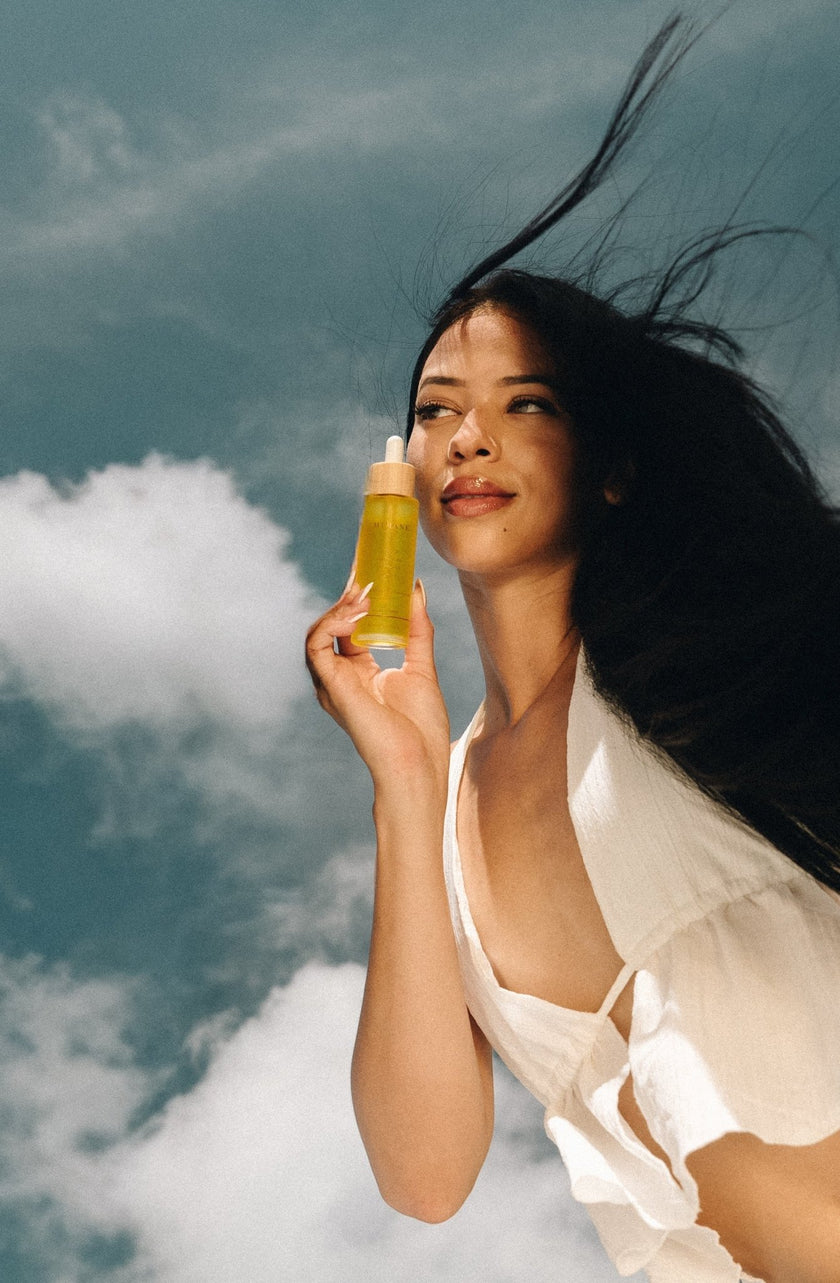
The ingredients matter here. Jojoba oil closely mimics the scalp's natural sebum, so it absorbs without sitting heavy on top. Argan and pumpkin seed oils add softness and a light sheen, babassu keeps the blend from feeling greasy, and squalane is a lightweight moisture that fine hair can handle. Those oils are the heart of the Growth & Strengthen Hair Oil, chosen so it feeds the strand instead of just glossing over it.
You can use an oil three ways: as a pre-wash treatment on dry hair before you shampoo, on damp hair before conditioning to boost slip, or as a small finishing touch on dry ends. The one rule most people get wrong is amount, so if you are new to it, start with less than you think. Our guide on how often to oil your hair breaks down frequency by hair type and goal.
What does a hair serum actually do?
A hair serum smooths the surface of the strand, tames frizz and flyaways, and adds shine almost instantly. Many serums also help hair slide against itself during styling and give a little buffer against heat, which is why people reach for them right before a blow-dry or after their hair is dry.
Because a serum works by coating, the result is fast and mostly cosmetic. It is excellent for a smooth finish on a humid day and for calming frizz when you are short on time. The trade-off is that silicone films can build up over several days, especially on fine hair, and eventually need a proper wash to lift off. A serum makes hair look healthier in the moment, but it is not doing much to change the hair underneath.
If frizz and flyaways are your main issue, you actually have two good routes: a lightweight serum on dry hair, or a small amount of oil worked through the ends. We walk through the oil approach in our post on using hair oil for frizz without weighing hair down.
Hair oil vs serum: which one does your hair need?
Choose based on your main goal: reach for an oil when hair feels dry, rough, or breaks easily, and reach for a serum when your top complaint is surface frizz or you want quick shine before an event. Many people end up wanting both for different moments, but here is how it breaks down.
If your hair is dry, rough, or prone to breakage
Go with an oil. Dryness and breakage are strand-condition problems, and a penetrating oil addresses them by softening and adding slip so detangling does less damage. A surface serum will make dry hair look better briefly but will not improve how it feels wash to wash.
If your main issue is frizz, flyaways, or humidity
Either can work. A serum gives the fastest smooth-and-shine finish, while a small amount of oil on the ends smooths frizz and lasts without the plasticky feel some serums leave. On very humid days, a serum's film holds up well against moisture in the air.
If you have fine hair
Less is more with both, but a lightweight oil built around squalane and jojoba often absorbs better than a heavy silicone serum that can flatten roots. Apply to the mid-lengths and ends only, never the scalp, and use a drop or two.
If you have curly or coily hair
An oil is usually the anchor, since curls and coils lose moisture fast and benefit from something that actually seals it in. A serum can layer on top for definition and frizz control, but the oil is doing the real conditioning work.
If your hair is color-treated
A clean, silicone-free oil is a safe pick. Look for oils without mineral oil or harsh solvents so you are conditioning without stripping tone, and use it as a pre-wash or finishing step.
Can you use a hair oil and a serum together?
Yes, and they actually complement each other when you get the order right: use the oil earlier in your routine so it can absorb, and save the serum for the final surface finish. The mistake is stacking heavy amounts of both, which leaves hair coated and greasy.
A simple sequence looks like this. Use the oil as a pre-wash treatment or on damp hair before conditioning, wash and style as normal, then, once hair is dry, smooth a small amount of serum over the surface for shine and frizz control. The oil handles the strand, the serum handles the finish. If your hair leans fine or gets weighed down easily, pick one per wash day rather than both.
Why Mimane Glow made an oil, not a silicone serum
When we formulated our hero product, we chose a penetrating plant-oil blend over a silicone serum on purpose. We wanted something that improves how hair actually feels over time, not just how it looks for an afternoon. That meant building around oils that get into the strand rather than a film that sits on top and eventually washes away.
The Growth & Strengthen Hair Oil blends cold-pressed jojoba, argan, babassu, and pumpkin seed oils with squalane, so it absorbs fast and never sits greasy. Jojoba earned its spot because it behaves like the scalp's own sebum, and squalane keeps the whole thing light enough for fine hair. We break down each ingredient and why it made the cut in our ingredient notes on jojoba and pumpkin seed. It is silicone-free and safe for color-treated hair, which is the standard we hold every formula to.
Frequently asked questions
Is a hair oil or serum better for frizz?
Both help, but a serum gives the fastest surface smoothing, while a small amount of oil on the ends calms frizz and conditions the strand at the same time. On very humid days a serum's film holds up slightly better.
Can I use hair oil as a serum?
Yes. A drop or two of a lightweight oil smoothed over dry ends works as a natural finishing step in place of a silicone serum. Use less than you would with a serum, since oil goes further.
Does hair serum cause buildup?
Silicone-based serums can build up over several days, especially on fine hair, and need a thorough wash to fully lift off. A plant oil absorbs instead of layering, so it is less likely to leave a film.
Is hair oil safe for color-treated hair?
A silicone-free oil without mineral oil or harsh solvents is safe for color-treated hair. Used as a pre-wash or finishing step, it conditions the strand without stripping tone.
Which goes on first, oil or serum?
Oil first, serum last. Let the oil absorb earlier in your routine, on damp hair or as a pre-wash, then apply serum to dry hair as the final surface finish.
Can fine hair use hair oil?
Yes, as long as it is lightweight and applied only to the mid-lengths and ends. Oils built around squalane and jojoba absorb well and are less likely to flatten fine hair than a heavy serum.
The short version: a hair oil feeds and strengthens the strand from the inside, and a serum smooths and shines the surface. If your hair is dry, rough, or breaking, start with the oil, since that is the one changing how your hair actually feels. Add a serum later if surface frizz is still bugging you. Most people do not need both on the same day.
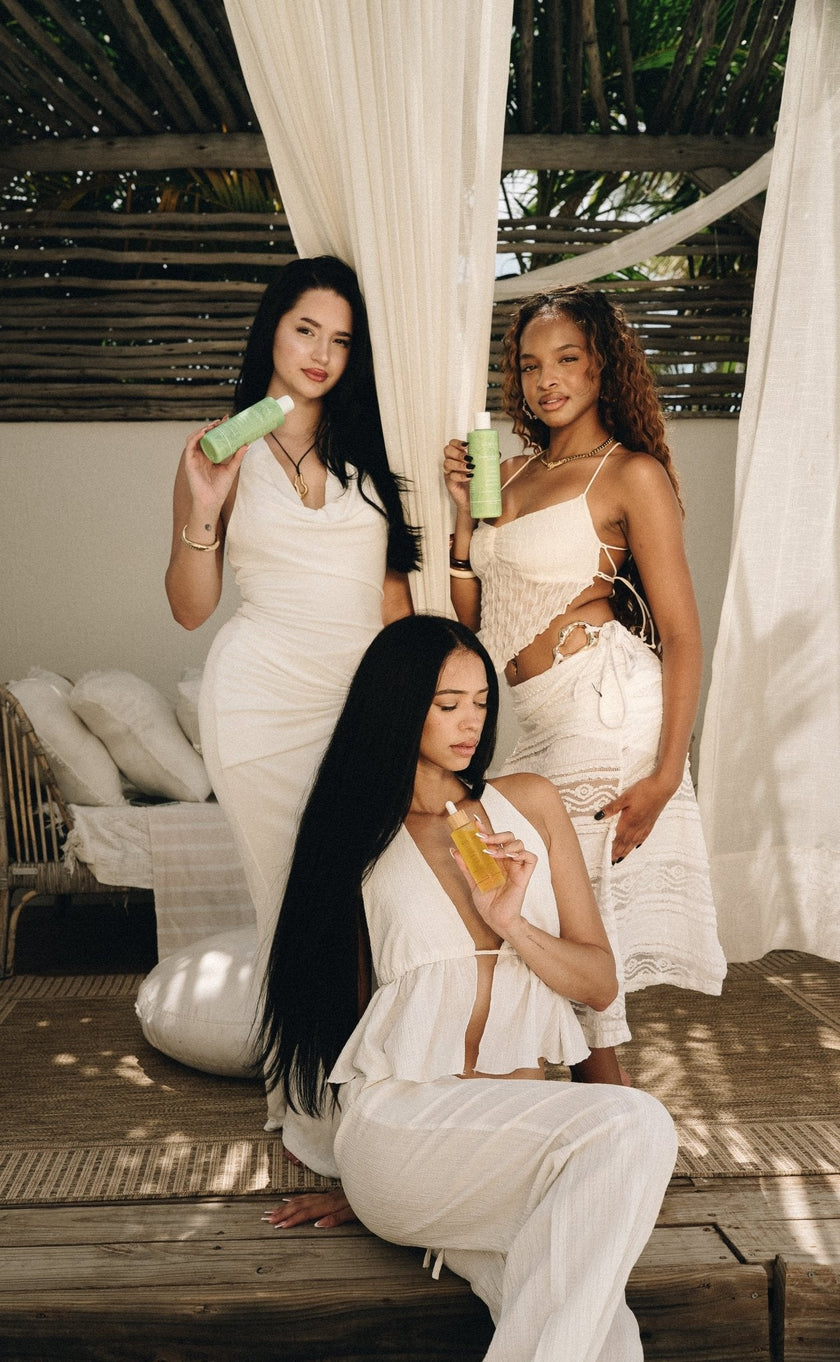
If you want the full routine in one place, the Glow Kit pairs the Growth & Strengthen Hair Oil with our sulfate-free shampoo and conditioner, which is how most people get started.