


Curly hair that looks great on wash day and feels dry by day two is usually a routine problem, not a product problem. The moisture is going in. Something is pulling it back out, or the layering order is off. This post walks through how to keep curly hair moisturized between wash days without the greasy, coated feeling that most curly routines end up causing by midweek. Written for anyone with wavy to curly textures who wants day-three and day-four hair that still feels soft, still has movement, and does not require a full re-wash to recover.
The short answer: To keep curly hair moisturized between wash days without buildup, refresh with water first, add a small amount of cream or leave-in, then seal with one to two drops of a lightweight oil. Do it only when hair actually feels dry, not on a schedule. Buildup usually comes from stacking heavy products, not from moisture itself.
Why Curly Hair Loses Moisture Faster Between Wash Days
Straight hair has a clear path from scalp to ends. The natural oil your scalp produces, sebum, travels down the strand and keeps it conditioned on its own.
Curly hair does not have that same advantage. Every bend in the strand interrupts sebum's travel. The ends barely see any of it, and the crown tends to stay drier than the roots. That is why curls can feel hydrated an hour after washing and tight by the next morning.
On top of that, curly hair has a more open cuticle layer. That means more water absorbs on wash day, which is good, and more water evaporates once the hair dries, which is the problem. The industry term for repeated swelling and shrinking of the hair shaft is hygral fatigue, and a well-cited review on hair cosmetics and hair damage (opens in a new tab) covers the underlying mechanics in detail.
What this means practically: curly hair needs a light refresh between washes to replace the moisture that evaporates, not another full conditioning treatment. That distinction is where most buildup problems start.
How to Keep Curly Hair Moisturized Without Causing Buildup
Buildup is not caused by moisturizing your hair. It is caused by how much product you leave on the strand when moisture is not the thing that is actually missing.
Most people reach for more of the same thick cream they used on wash day. A full palm of leave-in, reapplied daily, does not add moisture on day three. It adds film. The cuticle is already sealed at that point, so anything heavy sits on top instead of absorbing.
The fix is to think of midweek refreshes in three layers, in order of weight:
- Water first, because dry hair cannot absorb anything cream- or oil-based until it is rehydrated
- A small amount of water-based leave-in or cream, sized to a quarter or a dime
- One or two drops of a lightweight oil to seal
Skipping the water step is the single most common reason curly hair starts to feel coated. Cream on dry hair does not hydrate, it stacks. Adding water first gives the cream something to bond with, so most of it absorbs instead of sitting on the surface.
The Layering Order That Actually Holds Moisture
You may have seen the LOC method (Liquid, Oil, Cream) or the LCO method (Liquid, Cream, Oil). Both work. Which one works best depends on your hair's porosity.
Higher porosity hair, meaning hair that soaks up water fast and releases it just as fast, usually holds moisture better with the LCO order. The cream seals in the water, and the oil acts as the outermost barrier to slow evaporation.
Lower porosity hair, which resists water at first and takes longer to get fully wet, tends to prefer LOC. The oil helps the cream penetrate by keeping the cuticle warm and open slightly longer.
If you are not sure which one you are, start with LCO. It is the more forgiving order for most wavy to curly textures, and it is less likely to leave hair feeling weighed down.
One non-negotiable: water is always the first layer. Any product applied over dry hair on day three is a sealer, not a hydrator. You need the liquid to create the moisture in the first place.
The Mid-Week Refresh, Step by Step
Here is the routine as a practical sequence. You need a spray bottle with clean water, a leave-in or cream, and a lightweight oil.
- Fill a small spray bottle with filtered or distilled water. Tap water works, but minerals can build up over time on high-porosity curls.
- Section your hair loosely into four parts. This takes thirty seconds and it is the difference between evenly refreshed curls and random damp patches.
- Mist each section until the hair feels damp, not soaked. If it is dripping, it is too much.
- Rake a small amount of leave-in or cream through each section. A quarter-sized amount for the whole head is usually enough.
- Warm one or two drops of the Growth & Strengthen Hair Oil between your palms and smooth over the lengths and ends. Skip the scalp unless it feels dry.
- Scrunch upward toward the scalp to reset curl pattern. Let it air dry, or diffuse on low heat if you are in a rush.
Frequency: every two to three days on average. If your curls already feel soft and defined, skip the refresh. More is not better.
How Mimane Glow Approaches Moisture Retention in Curly Hair
Most curly hair routines fail between washes because the products on wash day were already too heavy. If the conditioner is built on layers of butter and wax, there is no room for a midweek refresh without tipping into buildup. The routine is broken before day two even starts.
The Nourish & Strengthen Conditioner was built around that reality. It uses behentrimonium methosulfate (BTMS) as its conditioning base, which bonds to the cuticle rather than sitting on top, so hair starts the week sealed but not coated. Hydrolyzed keratin and silk protein strengthen the strand so it resists the drying-out that drives breakage at the crown. Shea butter and argan give it slip without making the hair feel waxy by day three, and panthenol (pro-vitamin B5) pulls water into the strand to extend the hydration window.
That is the formulation decision that makes the midweek refresh possible. When wash day leaves hair conditioned but not over-layered, a light spray and a drop of oil is all it takes to bring curls back.
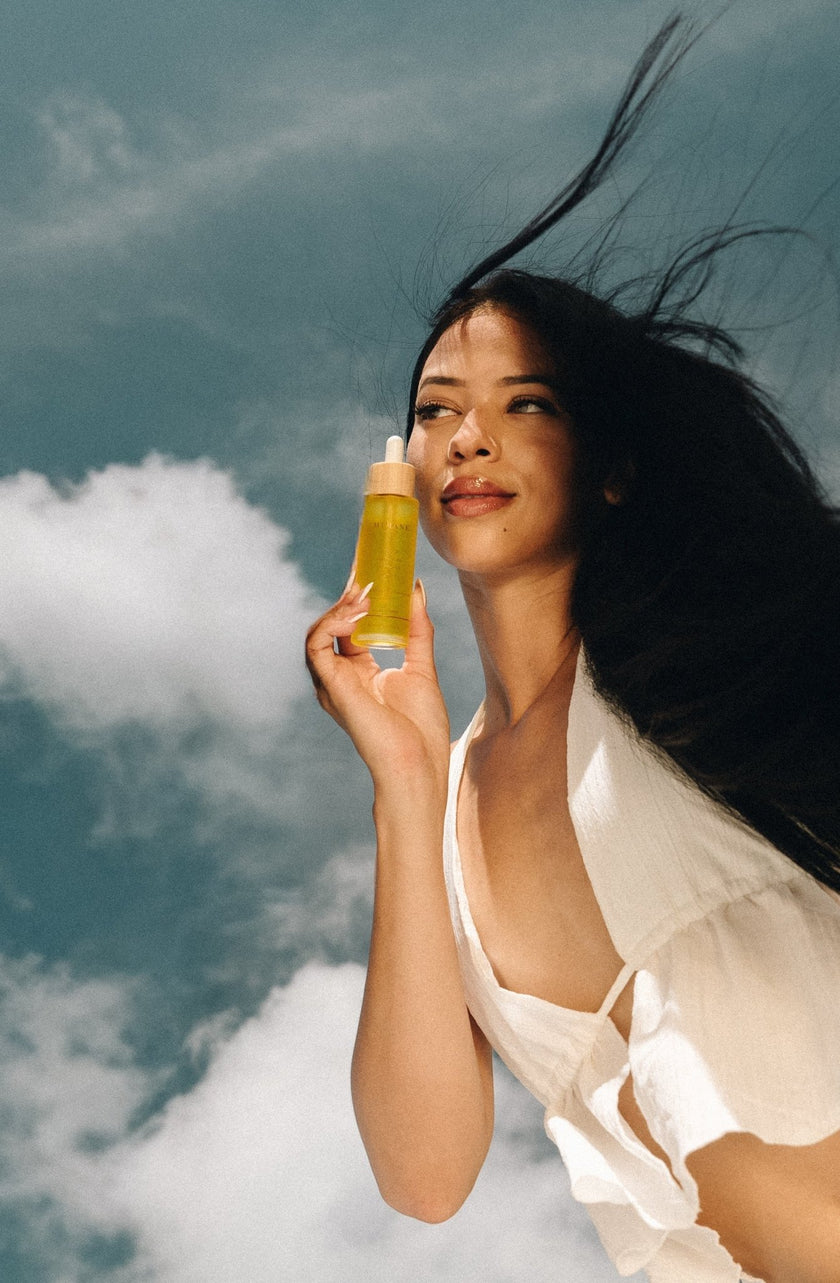
On the oil side, the Growth & Strengthen Hair Oil is intentionally dry. Jojoba mimics the scalp's own sebum, babassu absorbs in seconds, and squalane is one of the lightest emollients available. That combination was chosen specifically so the oil would not compete with the leave-in on a refresh day. Xilenia, the face of the brand, uses one or two drops on her wavy hair at the midweek mark and it is enough. There is no weight, no shine spike, no film. That is the whole point.
What to Skip Between Wash Days
A few things will keep your curls feeling coated no matter how good the rest of your routine is:
- Reapplying wash-day styler daily. It was designed to hold for multiple days, so doubling up just stacks it.
- Heavy butters and waxes past day one. Shea butter, mango butter, and petrolatum have their place on wash day for some hair types, but they are not a refresh tool.
- Oil without water. Oiling dry curls on day three does not moisturize them, it coats them. Always mist first.
- Hot water on the scalp between washes. It strips the remaining oils and makes hair feel drier by evening.
- Sleeping on cotton pillowcases. Cotton pulls moisture out of the hair while you sleep. A satin pillowcase or bonnet holds moisture in and dramatically reduces how much refresh you need in the first place.
None of these are hard rules, but they are the fixes that tend to solve a chronically dry day-three problem faster than any new product will.
What to Expect by Day 3 or 4
If the routine is working, curls on day three should feel soft to the touch, even if they have lost some of their wash-day definition. That is normal. Definition fades faster than moisture does.
A mid-week refresh should bring most of the shape back without adding visible weight. If your curls feel heavy or look stringy after, you used too much product or skipped the water step.
By day four, most curly hair starts asking for a wash regardless of the routine. Sebum buildup on the scalp and gradual product layering are cumulative, and at some point the right answer is a wash, not another refresh. Pay attention to the scalp. If it feels itchy or tight, it is a wash-day signal, not a dry-hair signal.
For most people, the cycle lands around every three to four days. Trying to stretch past that with more product usually creates the exact buildup everyone is trying to avoid.
Keeping curly hair moisturized between wash days is less about adding more and more about applying the right things in the right order. Water first. Small amounts. Lightweight products that do not stack into buildup.
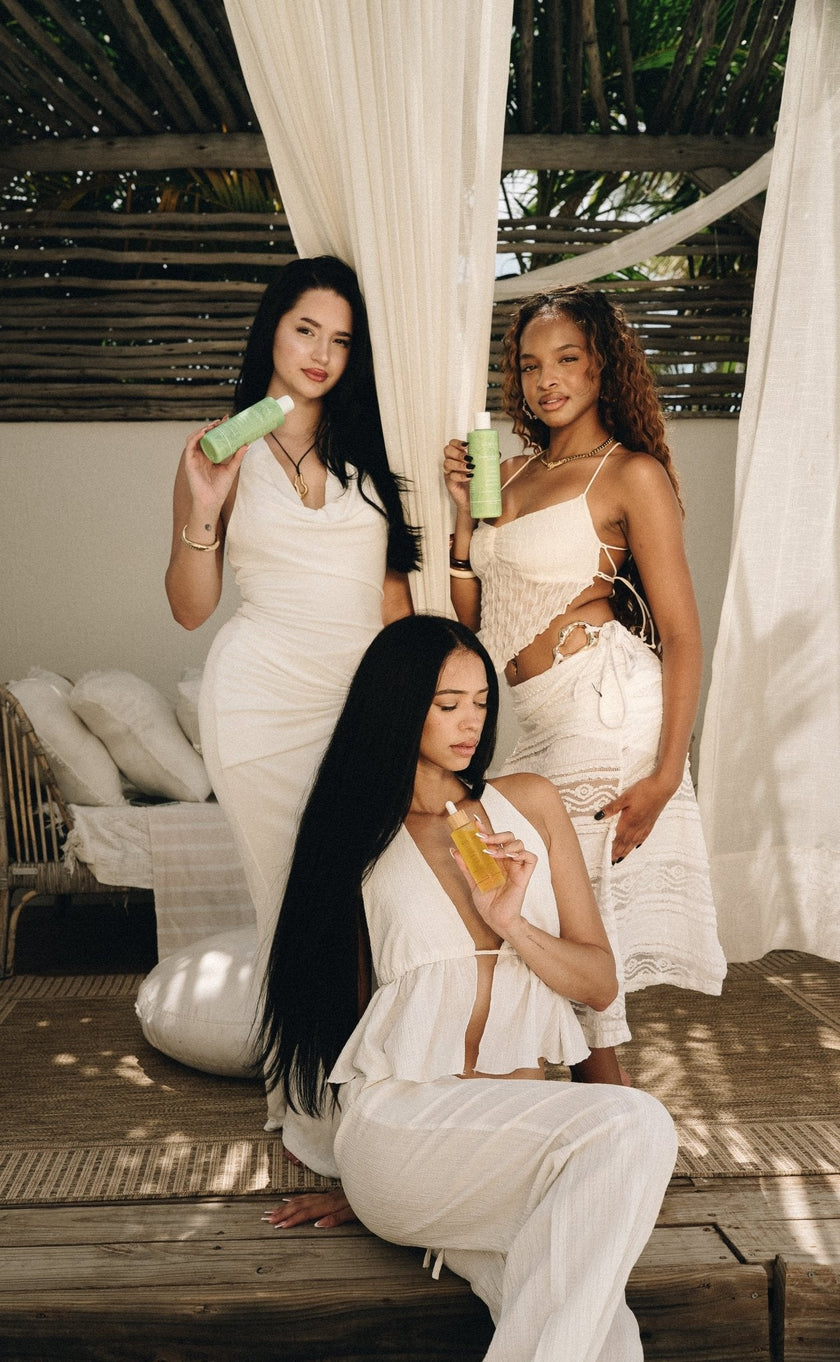
The easiest way to start is with a wash-day base that sets you up for a light refresh instead of a heavy one. The Glow Kit has the conditioner, the oil, and the shampoo built for exactly that rhythm.
Keep reading from The Glow Book
- How Often Should You Deep Condition? A Realistic Guide by Hair Type
- Nourish & Strengthen Conditioner: Our 2-Minute Shower Detangle Method (Less Breakage)
- Thick and Coarse Hair: Getting the Most Out of Nourish & Strengthen Conditioner in One Pass
- Why Is My Hair Still Dry After Washing? Here's What's Actually Going On


)