

Three weeks out from the salon and the color still looks good, but the hair does not. It goes stringy the second it gets wet, the comb stalls halfway down, and your ends feel like dry grass between your fingers no matter how much conditioner you pile on. This is the honest version of a bleached hair care routine: what bleach permanently changed, what a wash day can genuinely bring back, and the order to do it in. It is for anyone a few weeks or a few months past a lightening service who just wants soft hair again.
Bleached hair gets soft again by replacing what bleach stripped off the outside of the strand: lipids, moisture, and slip. Oil before you wash, a sulfate-free cleanse, a conditioner you actually leave on long enough, and less heat between washes. Softness comes back in one or two wash days. Fewer snapped ends takes about a month.
What does bleach actually do to your hair?
Bleach swells the cuticle open and oxidizes the inside of the strand to dissolve your natural pigment, and that reaction does not politely stop at the pigment. It also strips the thin lipid layer that makes a healthy strand water-repellent and smooth, and it converts some of the sulfur bonds holding keratin together into cysteic acid, which does not convert back.
This is measurable, not a marketing story. A 2016 metabolomic study in Experimental Dermatology, run by researchers at the AMOREPACIFIC R&D Center and Ewha Womans University, quantified amino acids and lipids in hair tresses before and after dyeing, perming, and bleaching. Cysteic acid rose and methionine and tryptophan fell, consistently enough that the authors proposed those markers as a way to grade how chemically damaged a head of hair is (Joo et al., 2016, via PubMed).
So the strand you are holding has less protein in it and less lipid on it than it did before the appointment. That is why bleached hair drinks water fast, swells, and then feels rough and squeaky when it dries. Bond-building treatments can cross-link some of what is left, which helps. Nothing takes a bleached strand back to virgin hair.
Can bleached hair be repaired, or only managed?
Managed, and managed well looks a lot like repaired. The structural damage is permanent, but almost everything you actually notice day to day is surface condition, and surface condition responds to a routine within a wash or two.
Think about what specifically bothers you. Rough texture, dullness, tangles that take ten minutes, frizz that shows up an hour after drying, and short broken pieces around your part and your ends. Every one of those is a moisture, lipid, or friction problem. None of them requires rebuilding a sulfur bond to improve.
What a routine cannot do is stop the damage from being there. Ends that are already split will split further, and the only honest fix for those is scissors. If your bleach is more than a year old and lives entirely in your last two inches, a trim will do more in one hour than any product will do in six months.
What does a bleached hair care routine look like on wash day?
Five steps, in this order, on a normal wash day. The whole thing adds maybe fifteen minutes to what you already do, and most of that is time the oil spends sitting on your hair while you do something else.
- Oil your lengths before you get in the shower. Dry hair, ends first, working up to about the middle. A few drops is the dose. Give it thirty minutes if you can, longer if you are doing chores first. This is the step that buffers the swelling, and it matters most on bleached hair. Our guide to choosing a hair oil for bleached hair covers which oils to avoid here.
- Cleanse the scalp, not the lengths. Shampoo goes on your roots. The runoff cleans your ends on its way down, which is all they need. Bleached lengths do not have the oil production to justify direct scrubbing.
- Condition and leave it. Squeeze the water out first, apply from the ears down, and give it three to five minutes. Applying conditioner to soaking hair dilutes it to nothing, which is why so many people feel like their conditioner stopped working.
- Detangle in the shower, with the conditioner still in. Wide tooth comb, ends first, short sections. This is where bleached hair either survives or snaps, and slip is the only thing protecting it.
- Rinse cool, squeeze with a t-shirt, and leave it alone. Rough towel drying undoes a chunk of what you just did. A cotton t-shirt or microfiber towel, pressed rather than rubbed.
Once a week, swap the conditioner step for a longer deep treatment. If you are shopping for one, what to look for in a hair mask for color-treated hair breaks down which ingredients earn their place.
How often should you wash bleached hair?
Every two to four days for most people, and stretch toward the longer end if your scalp lets you. Bleached hair loses moisture faster than it can replace it, and every wash restarts that clock. Two to three washes a week is the sweet spot where the scalp stays comfortable and the lengths stop feeling stripped.
Dry shampoo between washes is fine on your roots, but keep it off the lengths where it adds grit to hair that is already rough. If you work out daily, rinse with water and condition your ends rather than running a full shampoo every time. The full breakdown lives in how often to wash color-treated hair.
One more thing worth knowing: bleached hair usually behaves like high porosity hair, meaning it absorbs fast and loses moisture just as fast. Our high porosity guide explains why sealing matters more than soaking.
Does bleached hair need protein or moisture?
Both, but not on the same day and not in the same amounts. Bleached hair genuinely lost protein, so hydrolyzed keratin and silk protein have real work to do. It also lost the lipids that hold water in, so moisture is the daily job and protein is the occasional one.
The failure mode people hit is stacking protein treatments back to back because their hair feels weak. Protein on hair that already has enough of it reads as stiff, straw-like, and brittle, which feels exactly like the damage you were trying to fix. If your hair went crunchy after a treatment week, that is your answer. Lay off the protein for two or three washes and go heavy on moisture instead. Protein vs moisture walks through how to tell which one your hair is asking for.
A reasonable rhythm for bleached hair: protein-containing conditioner at every wash, a heavier protein treatment once every three or four weeks, moisture everywhere else.
Why Mimane Glow builds the bleached hair routine around a pre-wash oil
The pre-wash step carries the most weight here, and it has the most evidence behind it. A 2003 study in the Journal of Cosmetic Science by Rele and Mohile compared mineral oil, sunflower oil, and coconut oil on undamaged, bleached, and UV-exposed hair and measured how much protein each strand lost through washing. Coconut oil was the only one of the three that meaningfully reduced protein loss, applied before washing as well as after, and the authors credited its ability to get inside the cuticle rather than sit on top of it (Rele and Mohile, 2003, via PubMed).
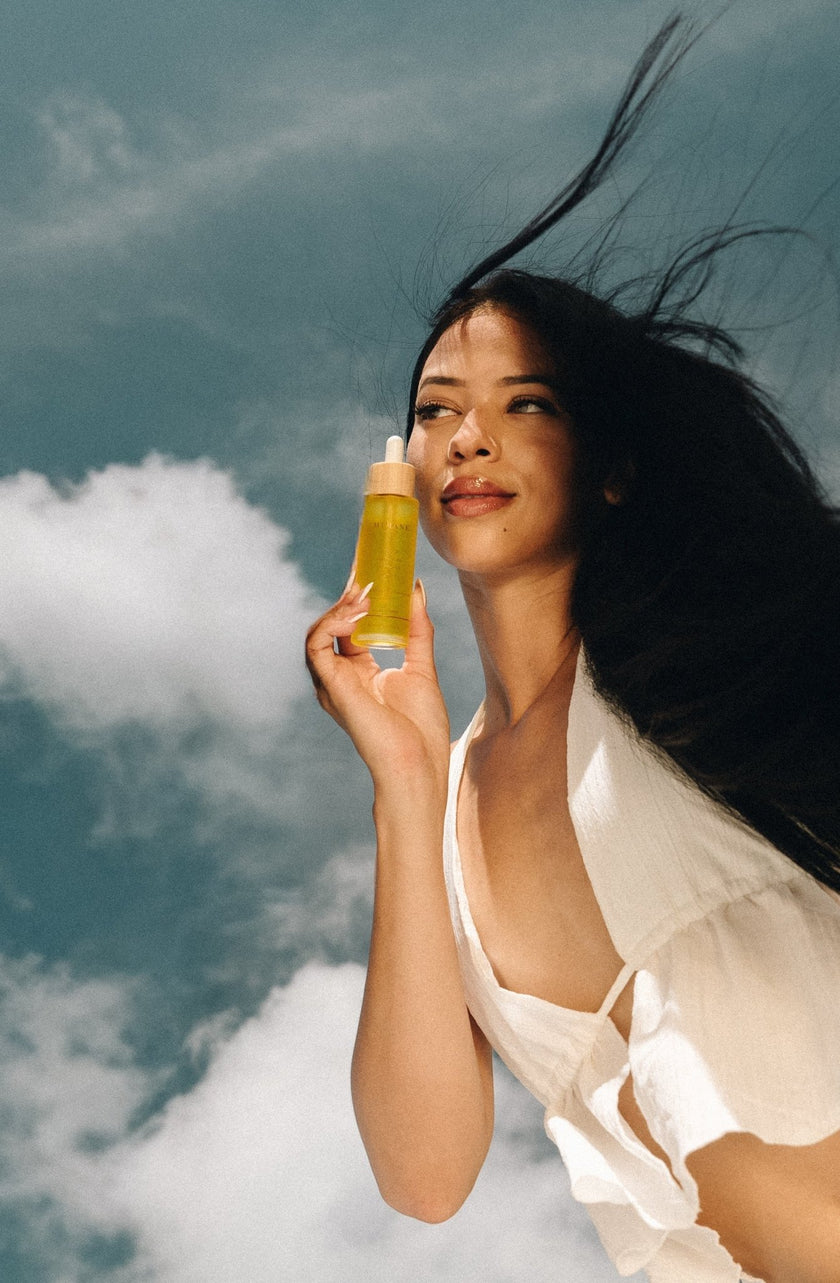
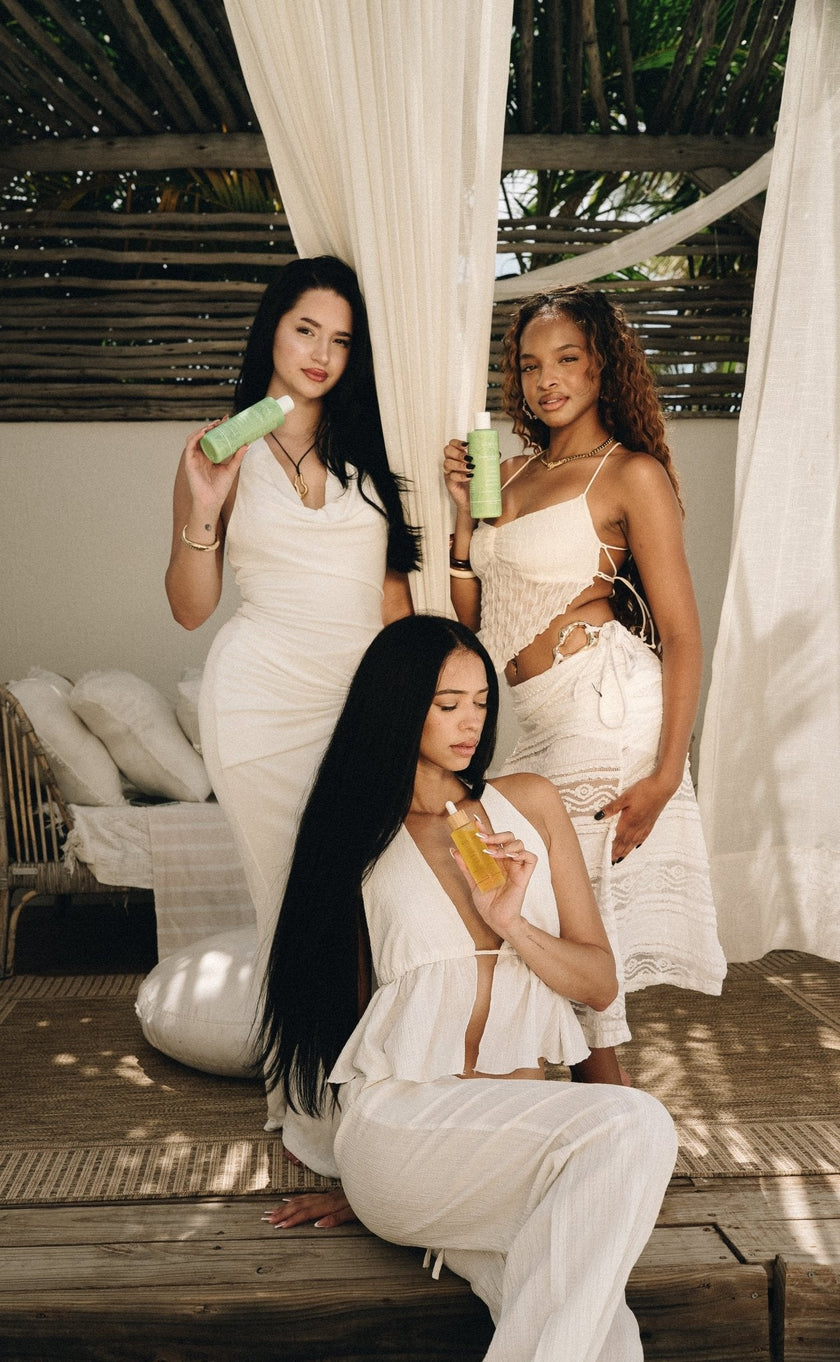
We do not use coconut oil. It is heavy on a lot of hair types, and plenty of people with bleached hair report it leaving them stiff. Babassu oil is the lighter route to the same mechanism: it is high in lauric acid, so it penetrates the shaft instead of coating it, without the weight. That is why babassu is in all three of our core products rather than just one, and why the Growth & Strengthen Hair Oil leads with jojoba, argan, babassu, and pumpkin seed, with squalane for slip and vitamin E along for the ride. It comes with a dropper because a few drops is genuinely the correct dose on bleached lengths.
On the wash side, the Nourish & Strengthen Duo is sulfate-free, which matters more on bleached hair than on any other hair type, and the conditioner carries hydrolyzed keratin and hydrolyzed silk protein alongside shea butter and panthenol. That is the protein and the moisture in one step, at a level you can use every wash.
Here is what we tell every customer who writes in about bleached hair: give it three wash days before you judge it, and judge it by your comb, not your mirror. The first thing that changes is how long detangling takes and how many short broken pieces end up on the bathroom floor afterward. Shine and softness follow. The bigger change, ends that stop giving up, shows up around week four.
Frequently asked questions
Will hair oil make my bleached hair brassy?
No. Brass comes from underlying warm pigment revealing itself as toner fades, not from oil. A plant oil sitting on the cuticle has no pigment to deposit and no developer to lift.
How long before bleached hair feels normal again?
Softness and slip usually improve within one or two wash days. Less breakage takes three to six weeks of consistency, and length you can see accumulate takes a few months, since the damaged ends still need to grow out or come off.
Should I cut my ends or try to save them?
If the ends are splitting, cut them. A split travels up the strand and no product reverses it. Everything above the split responds well to a routine, which is why a trim plus a routine beats either one alone.
Can I oil my hair before a toner or color appointment?
Skip it for the two washes before an appointment. Stylists want a clean, evenly porous canvas, and a fresh oil treatment can make toner grab unevenly. Resume right after.
Can bleached hair handle heat styling at all?
Occasionally, at lower temperatures, with protection, and not on wet hair. Bleached strands hold more water and take structural damage faster under heat, so dropping your iron 30 degrees and halving your passes does more for your ends than any product.
Is sulfate-free shampoo actually necessary after bleaching?
It makes a real difference. Sulfates strip lipids efficiently, which is fine on hair that still produces them and rough on hair that bleach already stripped.
The bottom line on bringing bleached hair back to soft
A bleached hair care routine will not undo what bleach did to the inside of the strand, and it does not need to. Oil before you wash, cleanse at the scalp, leave conditioner on long enough to work, detangle with slip, and keep heat occasional. That is most of the way there, and you will feel the first part of it on your next wash day. If you want all three steps pulling in the same direction, the Glow Kit is the simplest place to start.