

Does Hair Oil Fade Color? The Honest Answer by Oil Type
If you just spent four hours and a few hundred dollars at the salon, you're probably second-guessing every product you put in your hair. Hair oil is one of the first things people get nervous about. The honest answer is that it depends entirely on the oil. Some oils are completely safe for color-treated hair. Some genuinely do speed up fade. This post breaks down the difference, oil by oil, so you can keep your color rich without giving up the shine and softness that oils bring.
This is for anyone with single-process color, highlights, balayage, vivids, or henna who wants to keep using hair oil without losing tone weeks earlier than they should.
The Short Answer: Does Hair Oil Fade Color?
Hair oil itself does not strip color the way clarifying shampoo or sulfates do. What changes the equation is which oil, how it's applied, and how often you wash it out. Light, fast-absorbing oils like jojoba, argan, and babassu are safe for color-treated hair. Heavy, deeply penetrating oils like coconut and unrefined olive oil can lift color faster, especially on freshly dyed strands.
Why Some Oils Fade Color and Others Don't
Color sits inside the cortex of the hair, underneath the cuticle. Anything that swells the cuticle, pushes water in and out repeatedly, or actually penetrates into the cortex can move pigment with it. That's the mechanism behind color fade.
Coconut oil is the most-studied example. It's high in lauric acid, a small, straight-chain fatty acid that genuinely penetrates the hair shaft. A well-known J Cosmet Sci study on coconut oil penetration (opens in a new tab) showed it reduces protein loss from the cortex, which is great for damaged hair, but that same penetration is what can shift pigment in freshly colored hair.
Oils with larger molecular structures, like jojoba, argan, and babassu, behave differently. They coat the cuticle, smooth the surface, and add slip without forcing their way into the cortex. That's why they're the safer pick on color.
The other factor is heat. Sitting under a hot dryer with a deeply penetrating oil opens the cuticle further and gives pigment more room to leave. Room-temperature application on damp or dry hair is much gentler.
Oils That Are Safe for Color-Treated Hair
These are the oils you can use confidently on single-process, highlights, balayage, and most vivids without speeding up fade.
Jojoba oil. Technically a liquid wax, not a triglyceride. Its structure mimics the scalp's natural sebum, so it sits on the cuticle and absorbs without forcing into the cortex. It's the most color-safe base oil there is.
Argan oil. Larger fatty acids (oleic and linoleic) that smooth the cuticle and add shine without deep penetration. Strong evidence for shine and frizz control. We have a full breakdown in our post on whether argan oil is safe for color-treated hair.
Babassu oil. Often confused with coconut because they look similar, but the fatty acid profile is lighter and the molecular behavior is different. Babassu sits on top, absorbs fast, and doesn't strip pigment. More on that in Babassu oil vs coconut oil for hair.
Squalane. Lightweight, biomimetic, sits on the cuticle. Great for fine, color-treated hair that needs slip without weight.
Pumpkin seed oil. Rich in fatty acids and zinc, supports scalp health, doesn't penetrate aggressively.
Rosemary and lavender essential oils. Used at low percentages in a finished formula, both are fine for color. The concern with essential oils is irritation, not fade.
Oils That Can Fade Color (and Why)
These aren't "bad" oils. They have real benefits for non-color-treated hair. But on freshly colored strands, they can pull pigment faster than you want.
Coconut oil. The biggest offender. High lauric acid content, penetrates the cortex, and can lift color noticeably on fresh dye jobs. Especially rough on reds, fashion colors, and balayage where tone is everything. If your hair is colored and you love coconut oil, save it for a deep treatment between color appointments, not the week after.
Unrefined olive oil. Heavy, penetrates more than jojoba or argan, and the natural pigments in olive oil can shift cool tones warm over time.
Castor oil. Not necessarily a fader on its own, but it's so thick that it usually gets washed out with a stronger shampoo, and that's what strips the color.
Mineral oil. Doesn't penetrate the way coconut does, but it traps everything underneath it and usually requires a clarifying wash to remove. Clarifying shampoo is the actual color killer here.
Sunflower and safflower oil at high concentrations. Some penetration, oxidize faster, can dull tone if used heavily.
The pattern: the smaller the fatty acid and the more penetration into the cortex, the higher the fade risk.
How to Use Hair Oil Without Stripping Your Color
The oil matters, but technique matters almost as much. A few rules that protect color on every wash day:
- Wait 72 hours after color. Give the cuticle time to close. Don't oil immediately after the appointment.
- Apply on damp, not soaking wet hair. Soaking wet hair has a more open cuticle. Damp gives you slip without overswelling.
- Stay on mid-lengths and ends. That's where dryness and color stress live. The scalp doesn't need oil every wash day if you have color-treated hair.
- Skip the hot tools after oiling. If you do heat style, use a heat protectant first, then oil at the end as a finish. Our post on using hair oil before a flat iron without buildup walks through the order.
- Wash with a gentle, sulfate-free shampoo. This is non-negotiable on color. Sulfates fade color faster than any oil ever will. We break down why sulfate-free actually matters in a separate post.
- Pre-wash oiling is your friend. A pre-wash treatment with a light oil acts like a buffer, so when you do shampoo, less color and moisture get pulled out. Full method here: pre-wash oil treatment for natural hair.
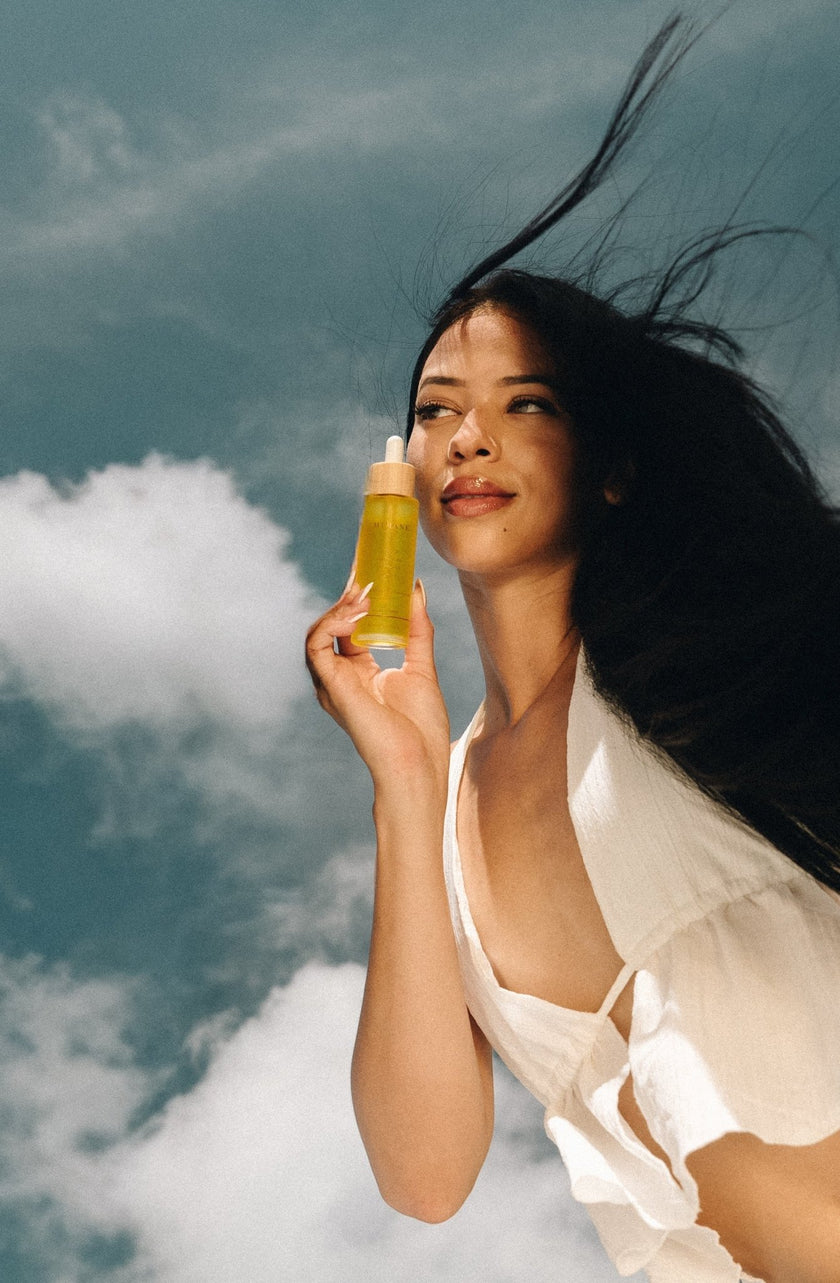
Why Mimane Glow Built Growth & Strengthen Hair Oil to Be Color-Safe
When we built the Growth & Strengthen Hair Oil, the color question came up early. Xilenia, who's the face of the brand, has had her hair every color from jet black to honey, and she didn't want a product that would undo a salon visit two wash days later.
That's why the base of the oil is jojoba, argan, babassu, pumpkin seed, and squalane. Every single one of those sits on the cuticle, adds slip, and absorbs without forcing into the cortex. There is no coconut oil in the formula. There is no mineral oil. There is no olive oil. The choice was deliberate.
Rosemary and lavender essential oils sit at low percentages where they support scalp health and add a clean scent without being harsh. Vitamin E and turmeric round out the antioxidant side, which actually helps slow down oxidation of color over time.
It's an oil designed to be used the day after a color appointment without making you regret it.
What to Expect After a Few Wash Days
The first thing most people notice with a color-safe oil routine is that their color holds tone longer between appointments. Reds stay red instead of fading orange by week two. Cool blondes don't pick up brass as fast. Brunettes keep depth instead of going dusty.
The second thing is shine. A light oil layer reflects light evenly across the cuticle, and on color-treated hair that reads as expensive. The salon finish stays for weeks instead of one wash.
The third is texture. Color is drying. Oils with smaller fatty acids replace some of the slip and softness that color processing strips, without the weight that ruins fresh styling.
None of this happens in one wash day. Give it three to four wash cycles to see the pattern.
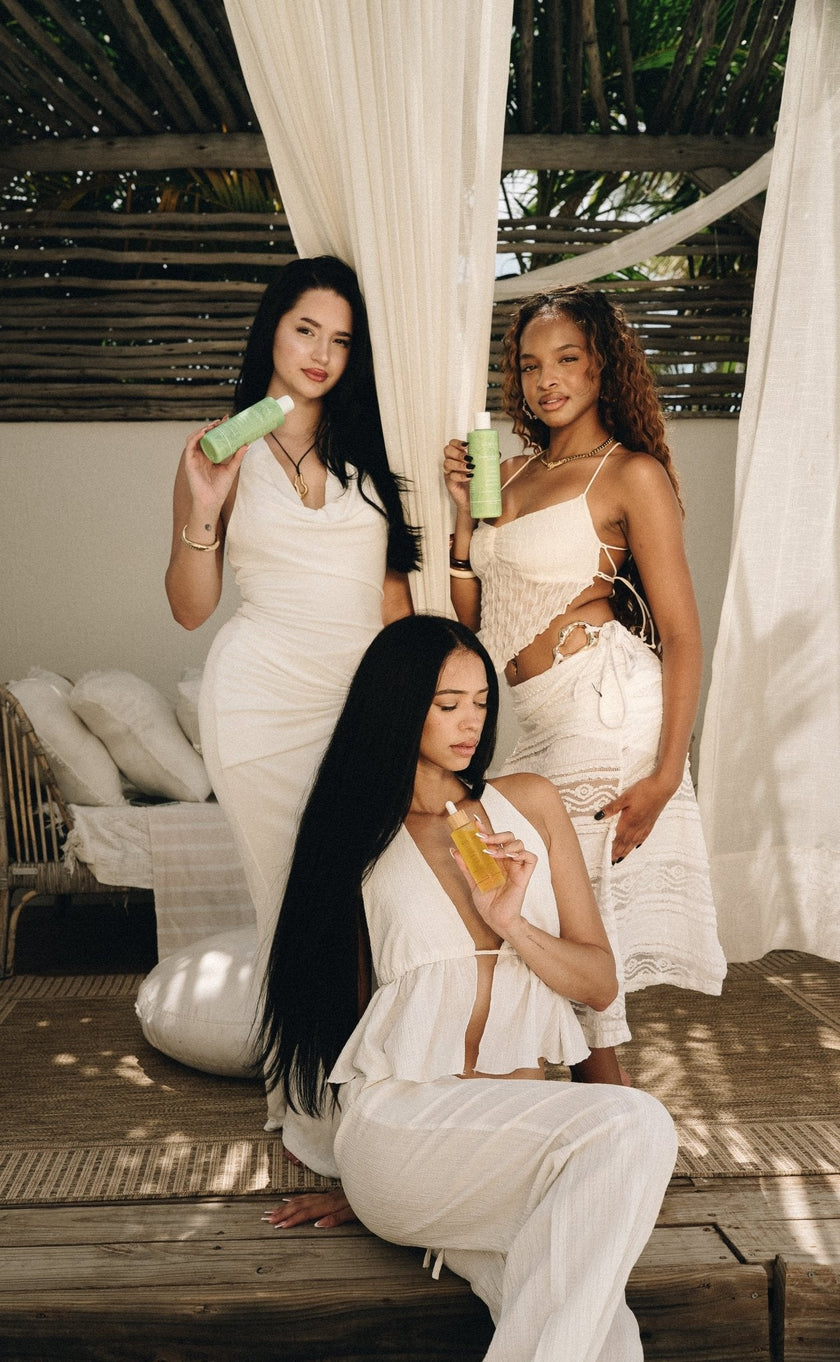
If you're starting from scratch and want the wash side handled too, the Glow Kit is the full sulfate-free routine, built to keep color-treated hair soft without stripping tone.
So the honest answer is: yes, some oils fade color. But the right oil, used the right way, protects color and extends it. That's the standard we built the Growth & Strengthen Hair Oil to meet.