

Coconut oil has been the go-to hair treatment for decades, so if you have highlights, balayage, or a fresh all-over color, it is fair to wonder whether that jar in your cabinet is helping or quietly working against your color. The short version is that coconut oil is not a color stripper, but it does not behave the same way on dyed hair as it does on virgin hair. This post breaks down when coconut oil is safe on color-treated hair, when it can leave your color looking dull, and how to use it without undoing a salon visit. It is written for anyone coloring at home or in the chair who still wants the moisture an oil gives.
Coconut oil is generally safe for color-treated hair when used as an occasional pre-wash treatment. It contains no bleach or harsh solvents, so it will not strip dye on contact. The caveats: it penetrates deeply and can leave porous, color-treated hair feeling stiff, and heavy or frequent use can dull color over time. Use it sparingly and rinse it out well.
Is coconut oil safe for color-treated hair?
Yes, coconut oil is safe for color-treated hair in most cases, as long as you treat it as an occasional pre-wash oil rather than a daily leave-in. Coconut oil has no peroxide, ammonia, or sulfates, the things that actually lift and strip permanent color, so a pre-wash application will not bleach your dye out.
The nuance is in how color-treated hair is built. Coloring opens the cuticle to deposit or lift pigment, which leaves the strand more porous and more protein-sensitive than virgin hair. Coconut oil is one of the few oils that penetrates the shaft instead of sitting on top, so on already-porous hair it can move from conditioning to heavy quickly. Safe, yes. Foolproof, no.
Why does coconut oil affect color-treated hair differently?
Coconut oil affects color-treated hair differently because it penetrates the hair shaft, and color-treated hair is more porous and protein-reactive than uncolored hair. On virgin hair that penetration is mostly a good thing. On dyed hair it can tip into stiffness.
The reason comes down to lauric acid, the main fatty acid in coconut oil. Its molecular shape lets it move into the cortex rather than coat the surface. A frequently cited 2003 study in the Journal of Cosmetic Science by Rele and Mohile found coconut oil reduced protein loss in both undamaged and chemically treated hair, more than mineral or sunflower oil, because of that penetration (you can read the abstract on PubMed). That same penetration is why some people with fine or color-treated hair find coconut oil makes their hair feel hard or straw-like after repeated use, a reaction often called protein overload.
Can coconut oil fade or dull your hair color?
Coconut oil does not chemically fade color, but heavy or frequent use can make color look duller over time. The dulling is usually buildup and texture, not pigment loss. When oil sits on the cuticle and is not rinsed fully, it can flatten shine and muddy tone, especially on cool blondes and vivid fashion colors.
There is also a slow-fade angle. Oils can loosen the cuticle slightly and, paired with hot water and repeated washing, may help some semi-permanent or direct dye molecules rinse away faster. This matters most for fresh color in the first week or two. For permanent color that has already set, an occasional coconut oil pre-wash is low risk. If you want the deeper breakdown by oil type, our guide on whether hair oil fades color walks through it.
How should you use coconut oil on color-treated hair?
Use coconut oil on color-treated hair as a pre-wash treatment, not a leave-in, and keep the amount small. Pre-wash means you apply it to dry or damp hair before you shampoo, let it sit, then wash it out, so the oil conditions without lingering and building up. Here is a simple, color-safe way to do it:
- Wait at least two weeks after a fresh color before doing an oil treatment, so the cuticle has closed and the tone has settled.
- Warm a small amount, about a teaspoon for mid-length hair, between your palms.
- Apply mostly to the mid-lengths and ends, the most porous and damaged areas, and keep it off the roots if your scalp runs oily.
- Let it sit 20 to 30 minutes. Skip the overnight soak on color-treated hair, since longer contact raises the chance of stiffness and dullness.
- Shampoo twice if needed to fully remove it, then condition as usual.
If you are new to oiling before washing, our step-by-step pre-wash oil treatment guide covers timing and amounts for every hair type.
What are the signs coconut oil is too heavy for your hair?
The clearest sign coconut oil is too heavy is hair that feels stiff, rough, or straw-like after using it, rather than soft. That stiffness is the protein-overload reaction, and it shows up faster on fine and color-treated hair. Other signs are limp roots, a greasy film that will not rinse out, and color that looks flat or dull.
If that sounds like your hair, you are not doing anything wrong, coconut oil is just not the right match for your strands. A lighter oil that conditions without the deep protein penetration is usually the better call for color-treated hair. Argan is a common alternative, and we cover it in our piece on whether argan oil is safe for color-treated hair.
Why Mimane Glow leans on lighter oils for color-treated hair
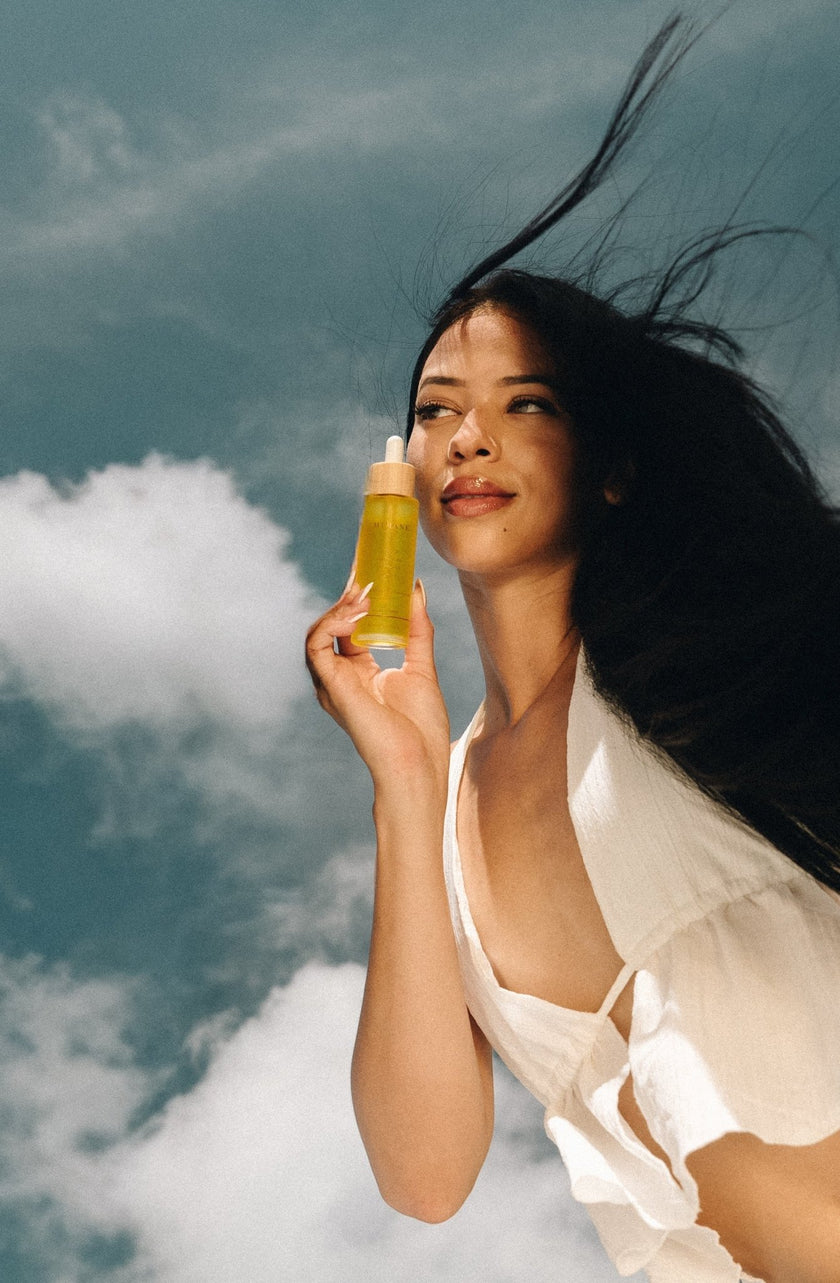
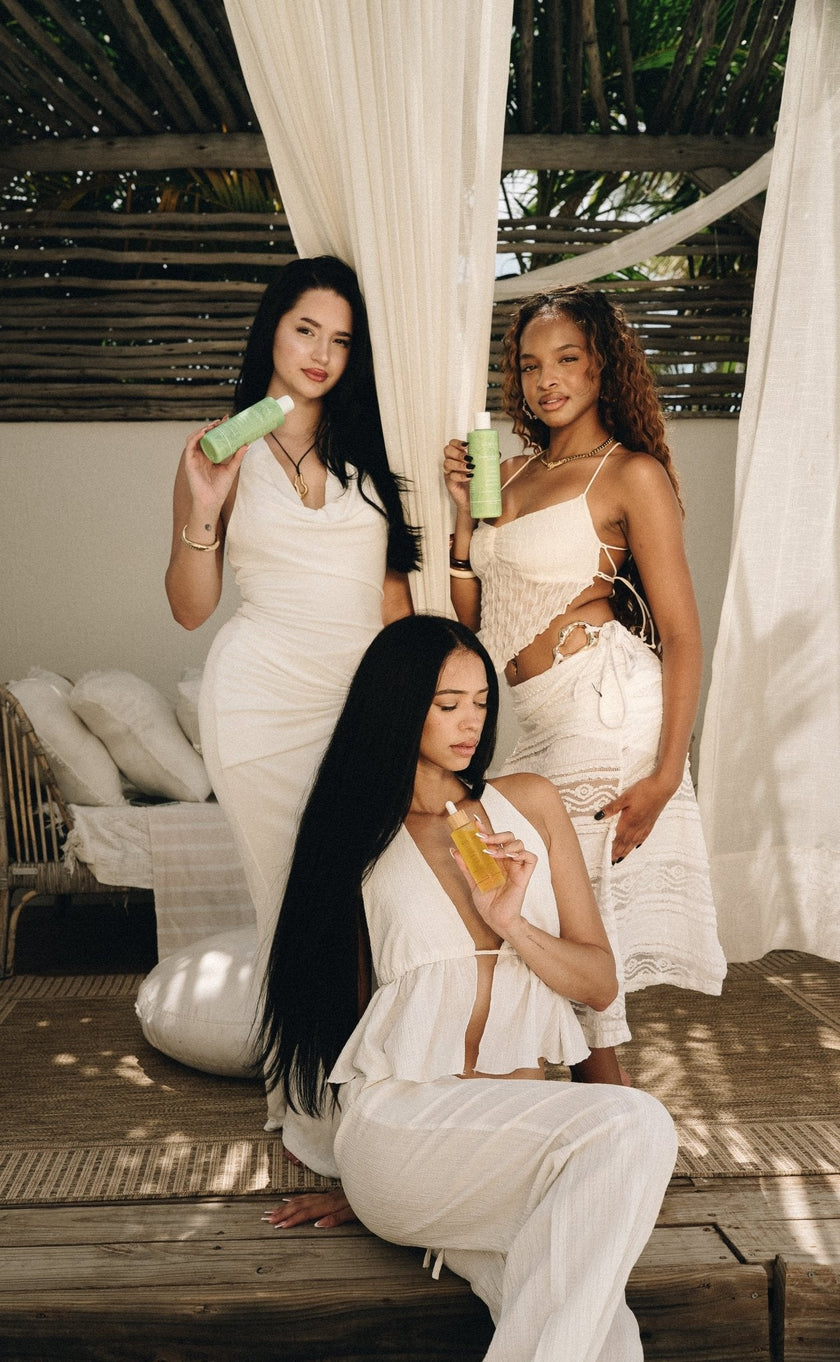
We built the Growth & Strengthen Hair Oil around lighter, color-friendly oils on purpose, because so many of our customers color their hair and tell us heavier oils leave it stiff. The base is jojoba and pumpkin seed oil rather than coconut.
Jojoba is technically a liquid wax that closely mirrors the scalp's own sebum, so it conditions and adds slip without the deep protein penetration that makes coconut oil feel heavy on porous hair. That is the formulation reason we chose it, not just because it is a familiar name. The result is an oil you can use on color-treated mid-lengths and ends for softness, shine, and easier detangling, with far less risk of the straw-like stiffness coconut oil can cause. For a fuller picture of which oils suit dyed hair, see our roundup of the best hair oil for color-treated hair.
Frequently asked questions
Will coconut oil strip my hair dye?
No. Coconut oil has no bleach, ammonia, or sulfates, so it will not strip permanent dye. Heavy, frequent use can dull color through buildup, but that is surface dullness, not pigment removal.
How often can I use coconut oil on color-treated hair?
Once every week or two as a pre-wash treatment is plenty for most people. More often than that raises the risk of buildup, stiffness, and dullness, especially on fine or highly porous hair.
Can I leave coconut oil in color-treated hair overnight?
It is better not to. Overnight contact increases the chance of protein-related stiffness and dullness on color-treated hair. A 20 to 30 minute pre-wash soak gives you the conditioning without the downside.
Is coconut oil or argan oil better for colored hair?
Argan oil is usually the gentler choice for color-treated hair because it conditions the surface without deeply penetrating the cortex. Coconut oil works for some people but is more likely to feel heavy on porous, dyed strands.
How long should I wait after coloring to use an oil treatment?
Wait at least two weeks. That gives the cuticle time to close and the color time to set, which lowers any chance of speeding up fade on fresh dye.
The bottom line on coconut oil and color-treated hair
Coconut oil is not off limits if your hair is colored, it just rewards a lighter hand. Treat it as an occasional pre-wash, keep it off the roots, and pay attention to whether your hair feels soft or stiff afterward. If coconut leaves your color-treated hair heavy, a lighter jojoba-based oil is the easier everyday option, and it comes in the Glow Kit if you want the full wash-day routine.
Want a color-safe oil you can actually use every wash week? The Growth & Strengthen Hair Oil is the lightweight place to start.