


You step out of the shower, your hair is clean, and it already feels like straw. Squeaky, tight, rough at the ends before you have even reached for conditioner. That dry-after-shampoo feeling is one of the most common wash-day frustrations, and most of the time it is a routine problem, not a permanent hair problem. This guide walks through why it happens and the small changes that keep your hair soft through the wash, whether your hair is straight, wavy, curly, or coily.
Preventing it is mostly small routine changes. Wash with lukewarm water instead of hot, use a gentle sulfate-free shampoo and focus it on your scalp rather than scrubbing the lengths, and always follow with conditioner on your mid-lengths and ends. Adding a pre-wash oil the night before or an hour ahead gives the hair a buffer so the wash removes buildup without stripping the strand.
Why does my hair feel dry right after I shampoo?
Shampoo feels drying because it does its job on more than just dirt. Cleansing surfactants lift away sebum, product buildup, and sweat, and when a formula is harsh it also lifts the natural oils that keep the cuticle smooth. When those oils are gone, the outer layer of the hair roughens and light scatters instead of reflecting, so hair reads as dry, dull, and tangled.
Water plays a part too. Hair swells when it is wet and the cuticle lifts slightly, which is normal, but very hot water lifts it more and speeds up how fast oils rinse away. Add a stripping shampoo to hot water and you get that tight, squeaky finish that people mistake for clean when it is really over-cleansed.
Porosity changes how much you feel it. High porosity hair, which has a raised or damaged cuticle from color, heat, or age, loses moisture faster and feels the strip more sharply. If your hair is dry no matter what you do, our breakdown of why hair still feels dry after washing covers the deeper causes worth ruling out.
Does my shampoo cause dry hair?
Your shampoo is the first thing to check, because the surfactants in it decide how gently or how aggressively your hair gets cleaned. Sulfates like sodium lauryl sulfate and sodium laureth sulfate create a fast, foamy lather and clean thoroughly, but they can pull away more of the natural oils than textured or color-treated hair can spare.
Gentler formulas use milder cleansing agents that clean without the deep strip. The Nourish & Strengthen Shampoo is built on decyl glucoside, coco glucoside, and cocamidopropyl betaine, three plant-derived and mild surfactants, with aloe vera juice sitting right behind water at the top of the formula. It cleanses buildup while leaving enough of the hair's own moisture in place, which is the whole point of going sulfate-free.
Sulfate-free is not just a marketing label. It changes how much oil comes off the strand during every single wash, which is exactly why we chose those glucoside surfactants for the formula instead of a cheaper sulfate base. If you want the fuller reasoning, here is why sulfate-free shampoo actually matters.
What water temperature should I wash my hair at?
Lukewarm to cool water is the sweet spot for keeping hair soft through a wash. Hot water opens the cuticle wider and dissolves surface oils faster, so it leaves hair feeling drier even when your shampoo is gentle. Cooler water rinses away product and sebum while letting the cuticle stay flatter.
You do not need an ice-cold rinse to see the difference. Wash and rinse in comfortably warm water, then finish with a cooler rinse at the very end to help the cuticle lie down and lock in the conditioner you just applied. Cooler water is also easier on a sensitive or tender scalp, which tends to react to heat.
Where you aim the shampoo matters just as much as the temperature. Work the lather into your scalp with your fingertips, since that is where oil, sweat, and product actually collect, and let the suds rinse down the lengths on their own instead of scrubbing them. Dragging shampoo up and down the strand roughs up the cuticle and pulls oil from the ends, which is the part of your hair that dries out first.
How does a pre-wash oil stop hair from drying out?
A pre-wash oil coats and partly penetrates the strand before water and shampoo touch it, so the wash removes buildup without pulling out as much of the hair's internal moisture. It acts like a buffer between your hair and the cleanse, which is why so many people with dry-prone hair swear by oiling first.
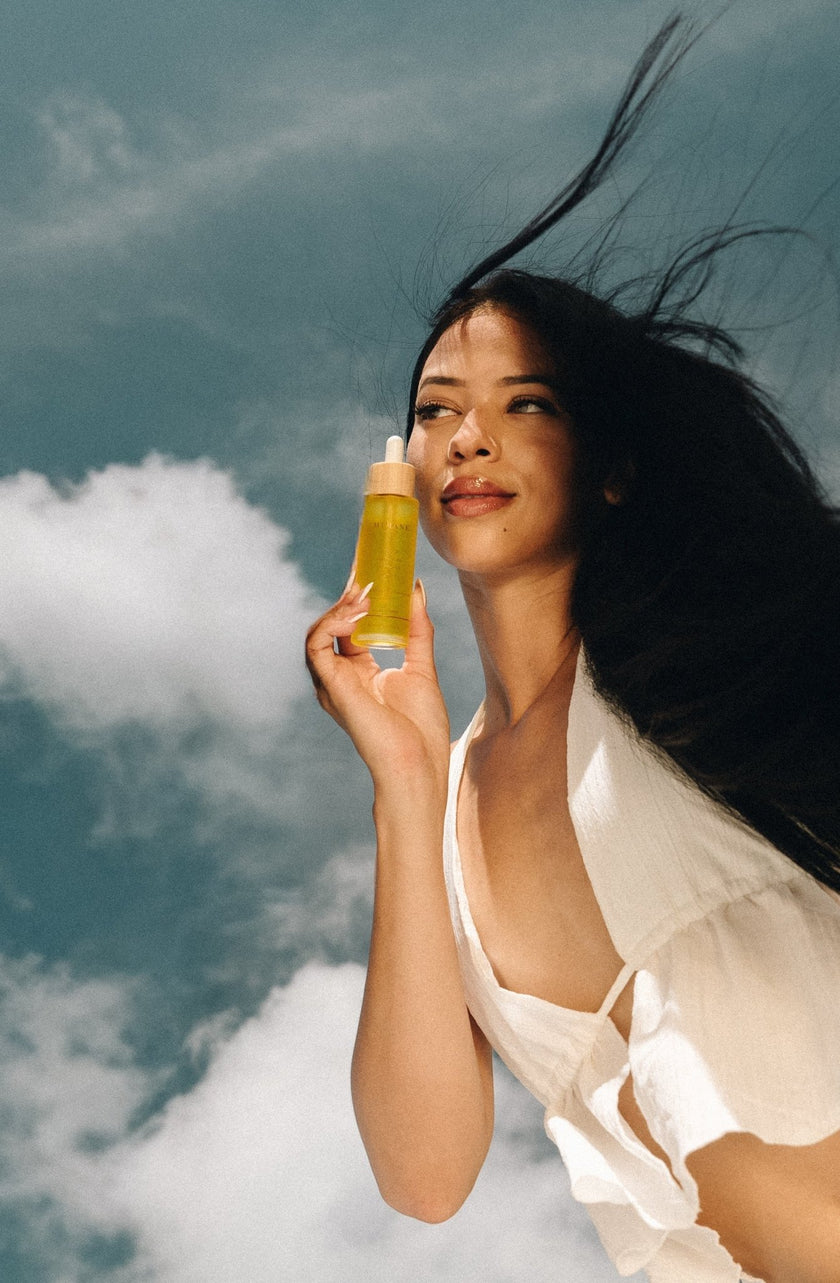
There is real research behind this. In a 2003 study in the Journal of Cosmetic Science, Rele and Mohile compared oils applied before washing and found that coconut oil, which penetrates the strand thanks to its high lauric acid content, reduced the protein loss hair goes through during a wash, while oils that only sat on the surface did not (Rele and Mohile, 2003, via PubMed). That is the same reason babassu oil, which is naturally high in lauric acid, sits in our Growth & Strengthen Hair Oil alongside jojoba, argan, and pumpkin seed oils.
To do it, warm a few drops between your palms and work them through your mid-lengths and ends about thirty to sixty minutes before you shower, or the night before for very dry or high porosity hair. Then shampoo as usual. The full method is here: how to do a pre-wash oil treatment step by step.
What is the right way to condition after shampooing?
Conditioner is not optional if your hair goes dry after washing, and where you put it matters as much as whether you use it. Apply it to your mid-lengths and ends, the oldest and most fragile part of your hair, and keep it off the roots where it is not needed. The ends are where dryness shows first, so that is where the slip and softness need to land.
Work it through with your fingers or a wide-tooth comb while it is in, so the hair detangles under the protection of the conditioner rather than dry and rough afterward. The Nourish & Strengthen Conditioner pairs behentrimonium methosulfate and shea butter with hydrolyzed keratin and silk protein to smooth the cuticle and give real slip, which makes detangling gentler and cuts the tugging that leads to breakage.
Give it a minute or two to sit before rinsing, especially on thick or coarse hair. That short pause lets the conditioning agents actually bind to the cuticle instead of getting rinsed straight off.
How Mimane Glow Builds a Wash Day That Doesn't Strip
At Mimane Glow the goal for every wash-day product is simple: clean the scalp and remove buildup without leaving hair worse off than it started. That standard shows up in the ingredient choices, from the mild glucoside surfactants in the shampoo to the aloe vera juice, glycerin, and panthenol that hold onto moisture.
The routine is meant to work as a set. Pre-wash oil first when hair needs a buffer, a gentle sulfate-free cleanse focused on the scalp, then conditioner on the lengths to reseal the cuticle. Each step is doing one job, and together they keep the hair soft from the wash through to dry.
If dryness has been a recurring problem for you, adjusting the routine usually solves it before you ever need to switch products. Small tweaks to water temperature, cleansing focus, and conditioning placement change the result more than a new bottle does.
Common mistakes that leave hair dry after washing
The usual culprits are easy to fix once you spot them. Washing in hot water, scrubbing shampoo down the full length of the hair, and skipping or rushing conditioner are the three that cause the most dryness.
Over-washing is another one. Cleansing every day can outpace how fast your scalp replaces its natural oils, so most hair types do better washing two to three times a week. Piling on more product to fight the dryness usually backfires, because buildup makes hair feel coated and dull, which sends people back to harsher washing in a loop.
Keep it simple: gentler cleanser, cooler water, conditioner where it counts, and a pre-wash oil when your hair needs extra protection.
Frequently asked questions
How often should I wash my hair if it gets dry?
Most hair types do well washing two to three times a week. Washing daily can strip the scalp's natural oils faster than they rebuild, which leaves hair drier over time.
Can I use a pre-wash oil on fine hair without it going flat?
Yes. Use only a few drops, keep the oil on your mid-lengths and ends rather than the roots, and shampoo it out fully. Fine hair benefits from the buffer as long as you go light on the amount.
Is it bad to skip conditioner if my hair still feels greasy at the roots?
No, but do not skip it entirely. Apply conditioner only to your mid-lengths and ends and keep it off the scalp, so your ends stay soft while your roots stay light.
Does sulfate-free shampoo really make a difference for dryness?
For many people, yes. Sulfate-free formulas use milder surfactants that remove buildup while leaving more of the hair's natural oils in place, so hair feels cleansed instead of stripped.
Will cold water alone fix my dry hair?
Cooler water helps the cuticle lie flatter and slows oil loss, but it works best paired with a gentle shampoo and conditioner. It is one piece of the routine, not a fix on its own.
My hair is color-treated and always dry after washing. What should I change first?
Start with a sulfate-free shampoo and lukewarm water, since color-treated hair has a more porous cuticle that loses moisture faster. Add a pre-wash oil on the ends for extra protection during the cleanse.
Bringing it back to your next wash
Dry hair after shampooing almost always comes down to how you wash, not a flaw in your hair. Cooler water, a gentle sulfate-free cleanse on the scalp, conditioner on the lengths, and a pre-wash oil when you need a buffer will change how your hair feels the moment you step out of the shower. Pick one change to try this week and build from there.
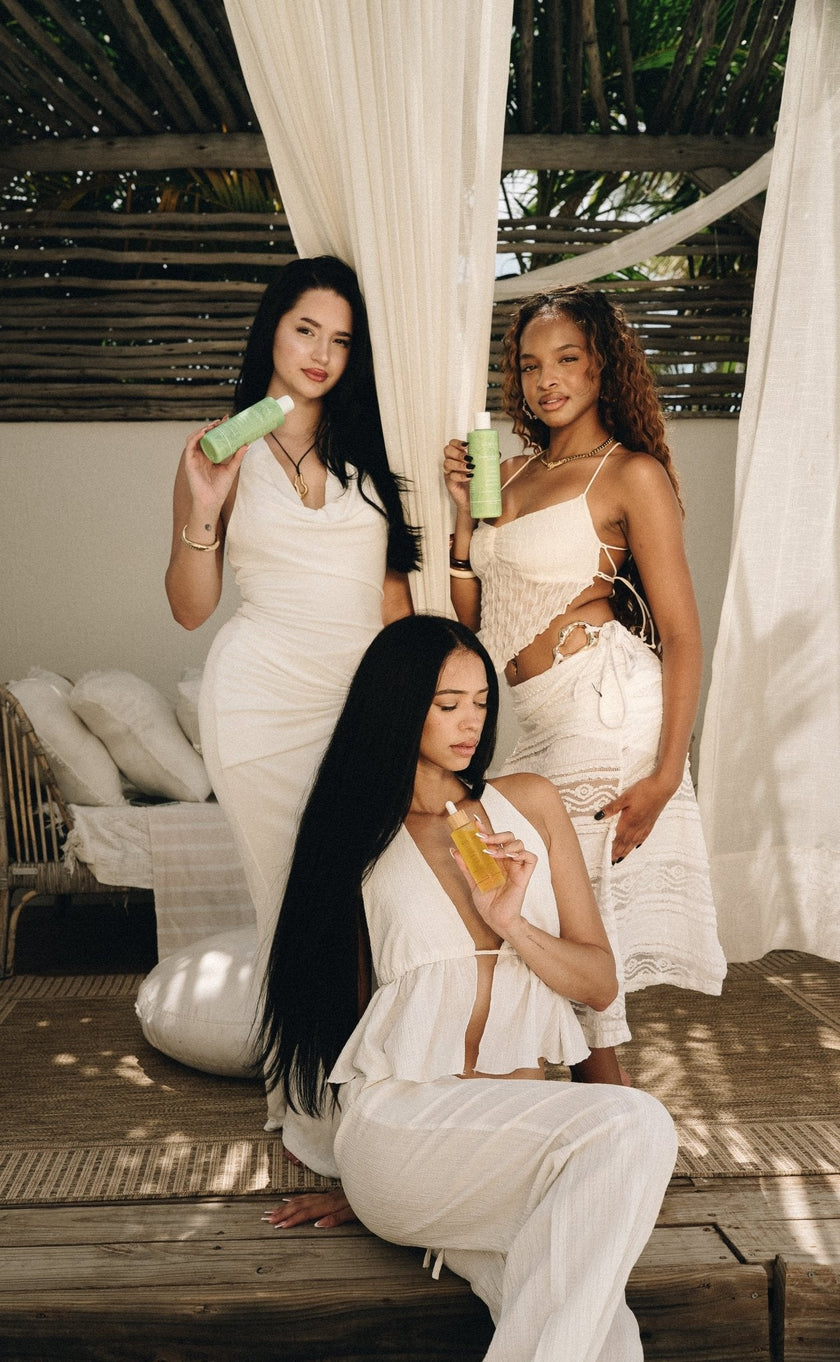
Want the full routine in one place? The Glow Kit pairs the oil, shampoo, and conditioner so every wash-day step works together.


)