


You oiled your lengths before your shower, shampooed twice, and by lunch your roots are already lying flat against your head. Fine hair is where pre-wash oiling goes wrong most often, and the oil itself is rarely the reason. This is a dose-first guide to using a pre wash hair oil for fine hair: which oils absorb instead of sitting on top, how many drops fine hair actually needs, where they go, and how to wash them out without stripping.
The best pre-wash oil for fine hair is a lightweight, fast-absorbing blend used in a small dose: three to five drops through mid-lengths and ends, twenty to thirty minutes before you shower, then two shampoo passes. Jojoba, squalane, argan and babassu absorb quickly. Heavy butters, coconut oil and mineral oil sit on the surface and flatten roots.
Why does pre-wash oil make fine hair look flat?
Because fine hair holds far less oil before it starts to show. A fine strand is thinner than a coarse one, and fine-haired people often have more strands per square inch, so the same three drops that vanish into thick hair spread across a much bigger surface and stay visible on it.
Three things cause the flat look, and all three are fixable. Too much product, applied too high on the head, then washed out too gently. Fix the dose and the placement and most of the problem disappears before you even change shampoo.
The oil is almost never the problem. The amount is.
What makes a good pre wash hair oil for fine hair?
Lightweight oils that absorb rather than coat, no silicones or mineral oil, and a dropper so you can control the dose to the drop. On fine hair, the applicator matters nearly as much as the formula, because a pump or an open-mouth bottle hands you three times what you need.
- Jojoba is technically a liquid wax ester, close in structure to the scalp's own sebum, which is why it absorbs instead of sitting on the strand. A jojoba oil pre-wash treatment is the easiest starting point for anyone nervous about weight.
- Squalane spreads thin and light, and it is the ingredient that keeps a blend from feeling like a coat of varnish. We broke down what squalane does for hair moisture separately.
- Argan gives shine and slip at a very low dose, which is exactly how fine hair wants it.
- Babassu is rich in lauric acid, so it penetrates the hair shaft instead of coating it. That is the difference we walk through in babassu oil versus coconut oil.
What to skip: heavy butters, straight coconut oil, and the drugstore "dry oils" that lead with cyclopentasiloxane or dimethicone. Read those labels closely and the argan or coconut on the front of the bottle often sits fourth or sixth on the ingredient list, behind the silicones doing the actual work. They deliver slip you can feel for an afternoon and nothing underneath it. If you want the wider version of this comparison, here is what to look for in a pre-wash oil across hair types.
Does oiling before you wash actually protect hair?
Yes, and the evidence is about protein, not volume. In a 2003 paper in the Journal of Cosmetic Science (Rele and Mohile, volume 54, pages 175 to 192), researchers compared mineral oil, sunflower oil and coconut oil applied to hair both before and after washing, then measured how much protein the strands lost. Coconut oil reduced protein loss on undamaged hair and on chemically treated, UV-exposed and heat-treated hair. Mineral oil and sunflower oil did not reduce it at all (Rele and Mohile, 2003, via PubMed).
The explanation the authors gave is the useful part. Coconut oil is a triglyceride of lauric acid, which has a real affinity for hair protein, and its small, straight molecule can move into the hair shaft. Mineral oil is a hydrocarbon with no affinity for protein, so it stays on the outside and changes how hair feels without changing what washing does to it.
Here is the honest catch. The oil that won that study is the one most fine-haired people cannot get away with, because coconut oil is heavy and slow to rinse. What transfers to fine hair is the mechanism, not the bottle: you want a lauric-rich oil that penetrates, delivered in a blend light enough to wash out cleanly. That is the job babassu does in our formula.
How many drops does fine hair actually need?
Three to five drops for shoulder-length fine hair, and that is the whole dose, roots included. Start at the low end. You can always add a drop next wash day, and you cannot take one back out without another shampoo.
- Chin to shoulder: 2 to 3 drops
- Shoulder to mid-back: 3 to 5 drops
- Past mid-back: 5 to 7 drops
Technique matters as much as the number. Warm the drops between your palms for a few seconds, then press them through your mid-lengths and ends in flat passes rather than raking with your fingers. Whatever is left on your hands goes to your ends, never back up to the crown.
If you change one thing this wash day, change the amount.
Should fine hair get oil on the scalp before washing?
Only if you are committed to two shampoo passes afterward. Scalp oiling has a real place, and the massage that comes with it is good for scalp comfort, but on fine hair an oiled scalp is the fastest route to a greasy part line by the second day.
The compromise most fine-haired people land on: massage the scalp dry, with clean hands and no product, for two or three minutes before the shower, and keep the oil on the lengths where the damage actually is. Save the full scalp treatment for a wash day when you have time to shampoo properly, not the morning of an early meeting.
How long should fine hair leave a pre-wash oil in?
Twenty to thirty minutes is the sweet spot. Fine strands take oil in quickly, so the extra hours mostly add residue rather than benefit, and the longer the oil sits the harder your shampoo has to work to clear it.
Overnight is the wrong default for fine hair. It suits thick, coarse or low-porosity hair that drinks slowly, and it costs fine hair a pillowcase and an aggressive wash for very little extra payoff. If you want the timing broken down properly, our step-by-step pre-wash oil treatment covers the full sequence.
How do you wash a pre-wash oil out without stripping fine hair?
Two shampoo passes, both at the scalp. The first pass barely lathers because it is busy lifting the oil, and that is normal, not a sign you need more product. The second pass foams the way you expect and is the one that actually cleans.
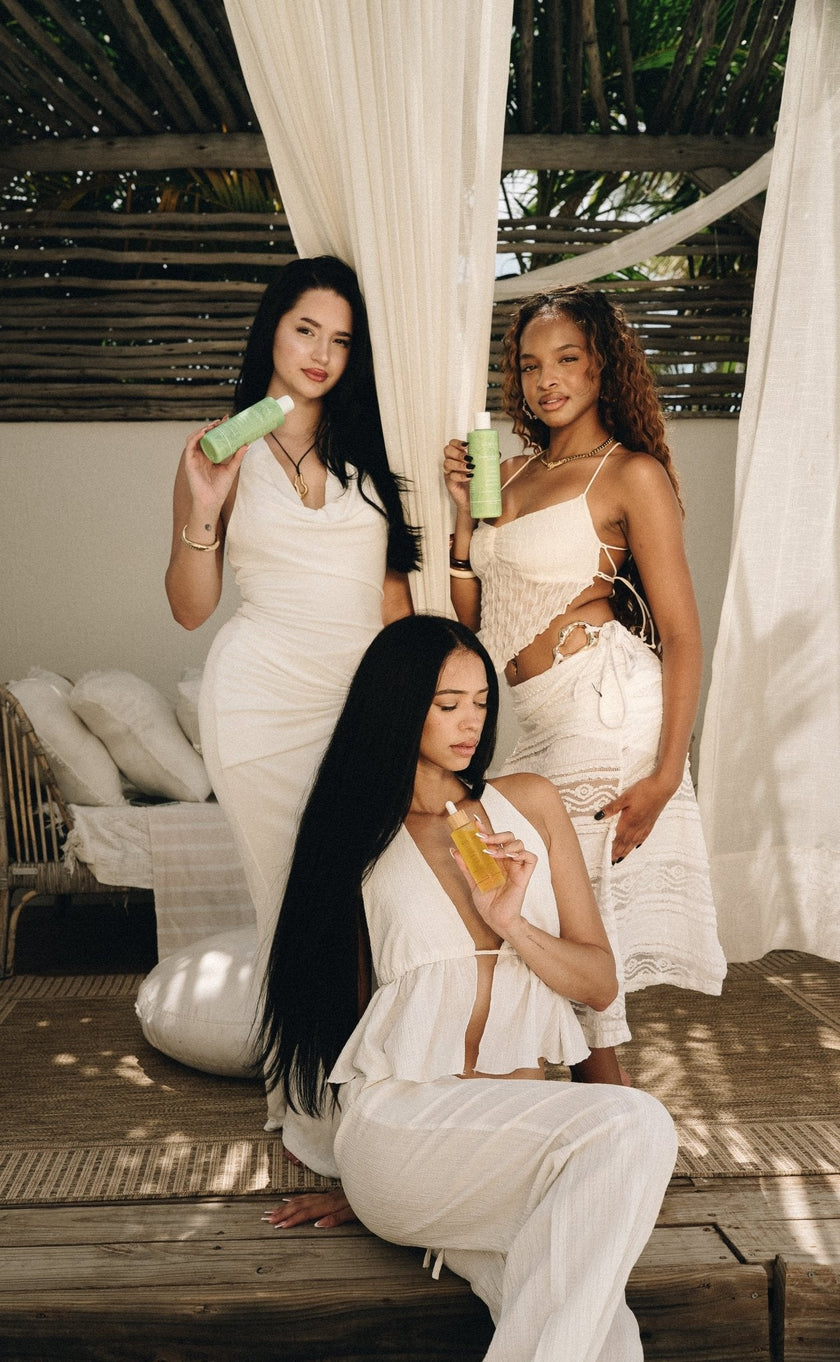
Sulfate-free formulas need that second pass more than sulfate ones do, which is exactly why people decide their gentle shampoo "does not work" after an oil treatment. Our Nourish & Strengthen Shampoo is built for that rhythm, with aloe vera juice sitting right behind water at the top of the formula and no sulfates to strip on the way through. Keep conditioner from the mid-lengths down and off the roots entirely, and the volume comes back. There is more on running the whole routine this way in our guide to fine hair and the Glow Kit without losing volume.
Why Mimane Glow put the hair oil in a dropper
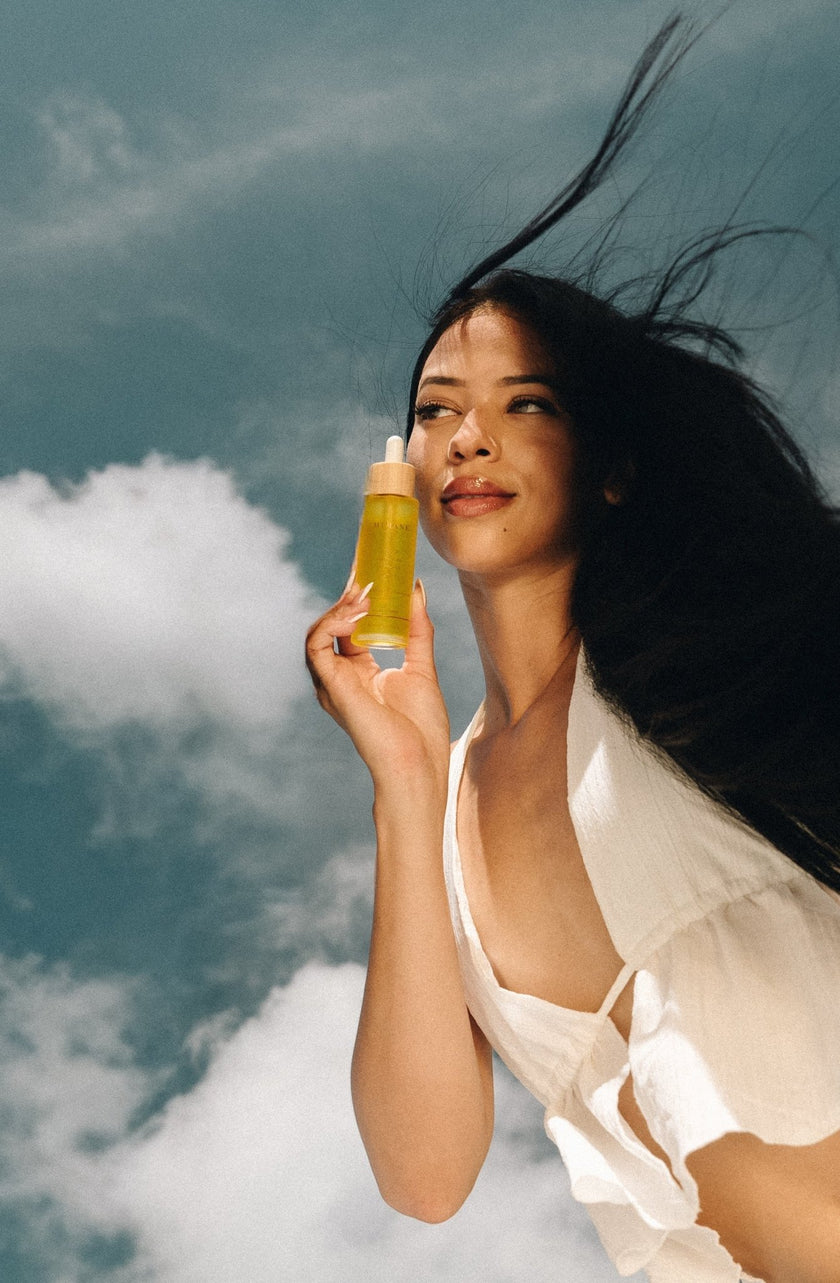
The dropper on the Growth & Strengthen Hair Oil is a fine-hair decision. A pump commits you to a fixed dose that is usually too much for a thin strand, and dose control is the single thing standing between a pre-wash treatment that works and one that leaves you flat by noon.
The Glow Complex blends jojoba, argan, babassu and pumpkin seed with squalane, turmeric extract, rosemary, lavender and vitamin E. No silicones, no mineral oil, no coconut oil. Jojoba and squalane are in there so the blend absorbs fast enough to use before a normal wash day, babassu for the lauric-acid penetration the research points to, and argan for slip on ends that snag.
Here is what we tell every fine-haired customer who writes in asking how much to use: start at three drops on your ends, wash it out with two passes, and only add a drop next time if your ends still feel dry. Most people never need more than five. The ones who tell us the oil weighed their hair down are almost always using triple what their hair can carry, and they get a completely different result the week they cut back.
Frequently asked questions
Can fine hair use a pre-wash oil every wash day?
Yes, at the low dose. Two to three treatments a week is a normal rhythm for fine hair, and it is the consistency rather than the quantity that shows up in your brush.
Will a pre-wash oil make fine hair look thinner over time?
No. Buildup from over-application can make hair look limp on the day, but it rinses out, and reducing breakage at the ends is what keeps fine hair looking fuller over months.
Is a pre-wash oil safe for fine, color-treated hair?
Yes. A blend free of mineral oil and harsh solvents will not strip color, and the pre-wash step buffers the strand at the point in the routine when color-treated hair is most fragile.
Can I use the same oil on dry fine hair as a finisher?
You can, but drop the dose to one, warmed and pressed onto the last two inches only. Anything more on dry fine hair reads as greasy rather than glossy.
Do I still need conditioner if I do a pre-wash oil treatment?
Yes. The oil protects the strand through the wash, and conditioner is what gives you detangling slip afterward. Use it from the mid-lengths down.
How long before I see a difference?
Softness and easier detangling usually show up within the first couple of wash days. Less breakage takes a few weeks of consistent use to notice in your brush.
The bottom line
A pre wash hair oil for fine hair works when you treat it as a measured step, not a soak: a light, fast-absorbing blend, three to five drops on the lengths, half an hour before you shower, then two shampoo passes at the scalp. Get those four things right and you keep the slip, the shine and the root lift at the same time. If you want the wash day working in one direction, the Glow Kit pairs the oil with the cleanse and conditioner built to rinse it clean.


)