


By the end of a long summer, a lot of hair looks and feels different. Drier at the ends, a little rougher to the touch, sometimes a shade lighter than it was in May. That is not in your head, and it is not only chlorine or salt water. Sunlight itself changes the hair, and the fix is not a heavy mask that leaves your strands greasy. Here is what UV actually does to hair, and a light routine to protect it, whatever your hair type or texture.
To protect your hair from sun damage, cover it when you can, keep it conditioned so the cuticle stays sealed, and add a light layer of oil or leave-in on your ends before you head outside. UV breaks down the keratin protein that gives hair its strength and oxidizes the pigment that holds your color, so the goal is a barrier plus moisture, not a heavy coat of product.
What does sun and UV damage actually do to your hair?
Sun damage weakens hair from the outside in. UV radiation breaks the disulfide bonds that hold keratin together, the protein responsible for hair's strength and elasticity, and it oxidizes melanin, the pigment that gives hair its color. That combination is what leaves summer hair drier, rougher, more prone to breakage, and often a little faded.
There is real measurement behind this. A 2025 study in the journal Molecules tested hair before and after UV exposure and found untreated hair lost 14.32% of its tensile strength, meaning it snapped under noticeably less tension after sun exposure than before (Molecules, 2025). The same study found hair treated with hydrolyzed keratin held onto its strength, which points to why protein matters so much once the weather warms up.
The cuticle takes the first hit. When those outer scales lift and erode, moisture escapes faster and the surface stops reflecting light evenly, which is why sun-stressed hair can look dull even when it is freshly washed.
Can the sun really fade your hair color?
Yes. UV light oxidizes both your natural melanin and artificial dye, which is why hair often looks lighter or brassier after weeks outdoors. Color-treated hair fades faster because dye molecules are already more vulnerable to light than the pigment your hair makes on its own.
If you color your hair, sun exposure is one of the biggest reasons it fades between salon visits. Rinsing right after sun, sweat, or a swim and keeping hair conditioned slows it down. There is a full routine for this in our guide on how to keep hair color from fading, but the short version is to seal the cuticle and limit direct midday exposure.
How do you protect your hair from sun damage without heavy products?
You protect hair from sun damage with a barrier and moisture, not weight. The goal is to keep the cuticle sealed and shield your strands from direct UV without coating them in something that goes greasy in the heat. Here is the routine, start to finish.
- Start with conditioned, sealed hair. A cuticle that lies flat resists UV and holds moisture better. On wash day, work your conditioner through mid-lengths and ends and give it a minute before rinsing.
- Add a light layer on your ends. A few drops of a lightweight oil or a leave-in on the lengths gives UV something to hit before it reaches the cuticle. Your ends are the oldest, most fragile part of your hair, so that is where to focus.
- Cover up at peak sun. A hat, a scarf, or even a loose bun tucked under a cap is the most effective UV protection there is. Physical cover beats any product.
- Rinse after swimming or sweating. Salt and chlorine sitting on sun-warmed hair speeds up the damage. A plain water rinse and a re-application of your leave-in resets the barrier.
- Keep it up between wash days. Refresh a small amount of oil or leave-in on dry ends before a beach day or a long afternoon outside.
Match the amount to your texture. Fine and straight hair needs the lightest touch, a drop or two of oil is plenty and too much will flatten it fast. Thicker, curlier, and coily textures can carry a little more product and often lose moisture faster in the heat, so a leave-in plus a sealing oil on the ends makes a bigger difference. Right amount, right hair type, and you get the barrier without the weight.
Xilenia keeps it simple in summer: conditioner never gets skipped, a few drops of oil go on the ends before she is out the door, and a hat comes along for anything past mid-morning.
Does a leave-in or hair oil work as UV protection?
A leave-in or hair oil helps, but it is not sunscreen and will not block UV the way SPF blocks it on skin. What a light oil or leave-in does is add a physical layer over the cuticle and hold moisture in, so your hair goes into the sun sealed and hydrated instead of dry and porous. That barrier plus the moisture is where the protection comes from.
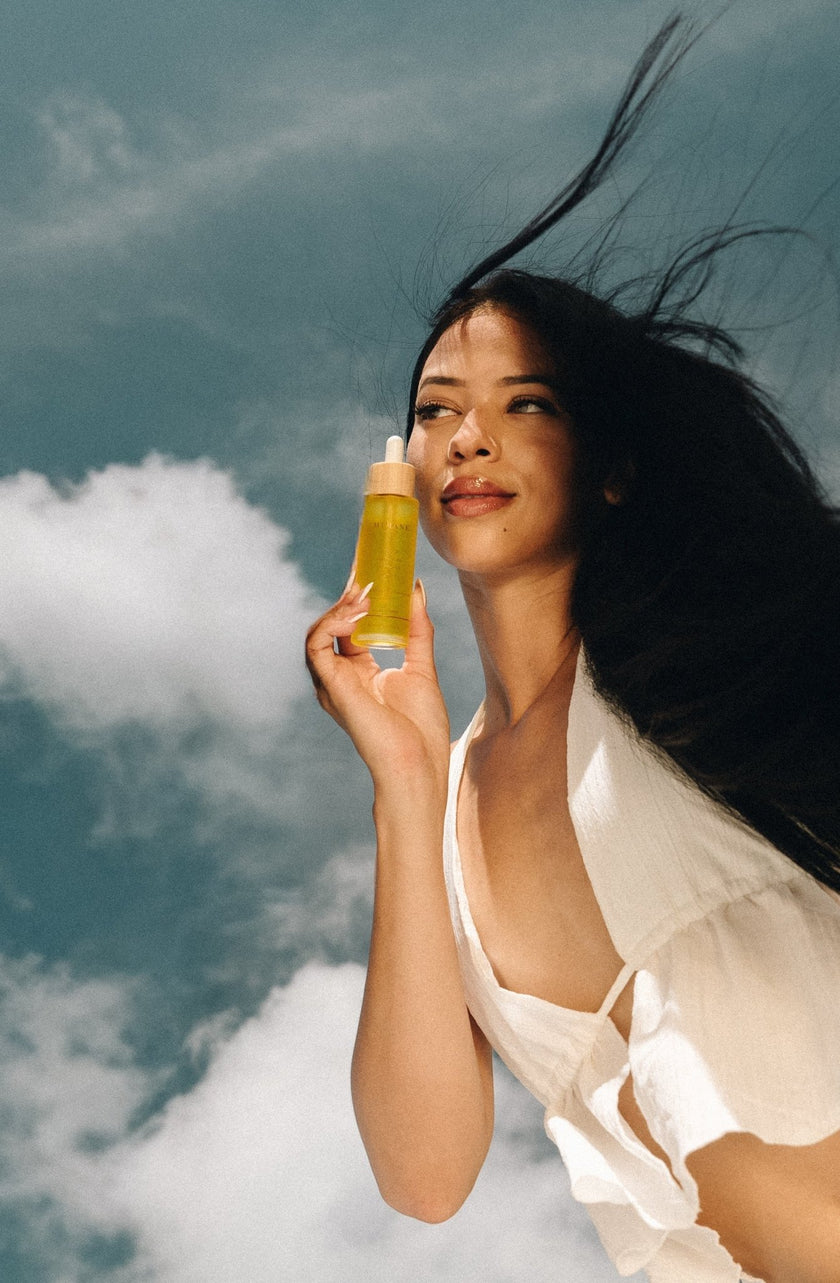
The key is lightweight. A heavy butter or a thick oil in summer heat leaves hair limp and greasy, and it can hold heat against the strand. The Growth & Strengthen Hair Oil is built around jojoba, argan, and babassu, oils that absorb fast and sit light, so a couple of drops on the ends gives you a barrier without the weight. Use it as a finishing step on dry hair, not a heavy soak.
How Mimane Glow thinks about summer hair protection
At Mimane Glow, summer protection comes down to two things: protein and lightness. Sun damage is largely protein damage, so keeping hair strong from the inside matters as much as any barrier on the outside.
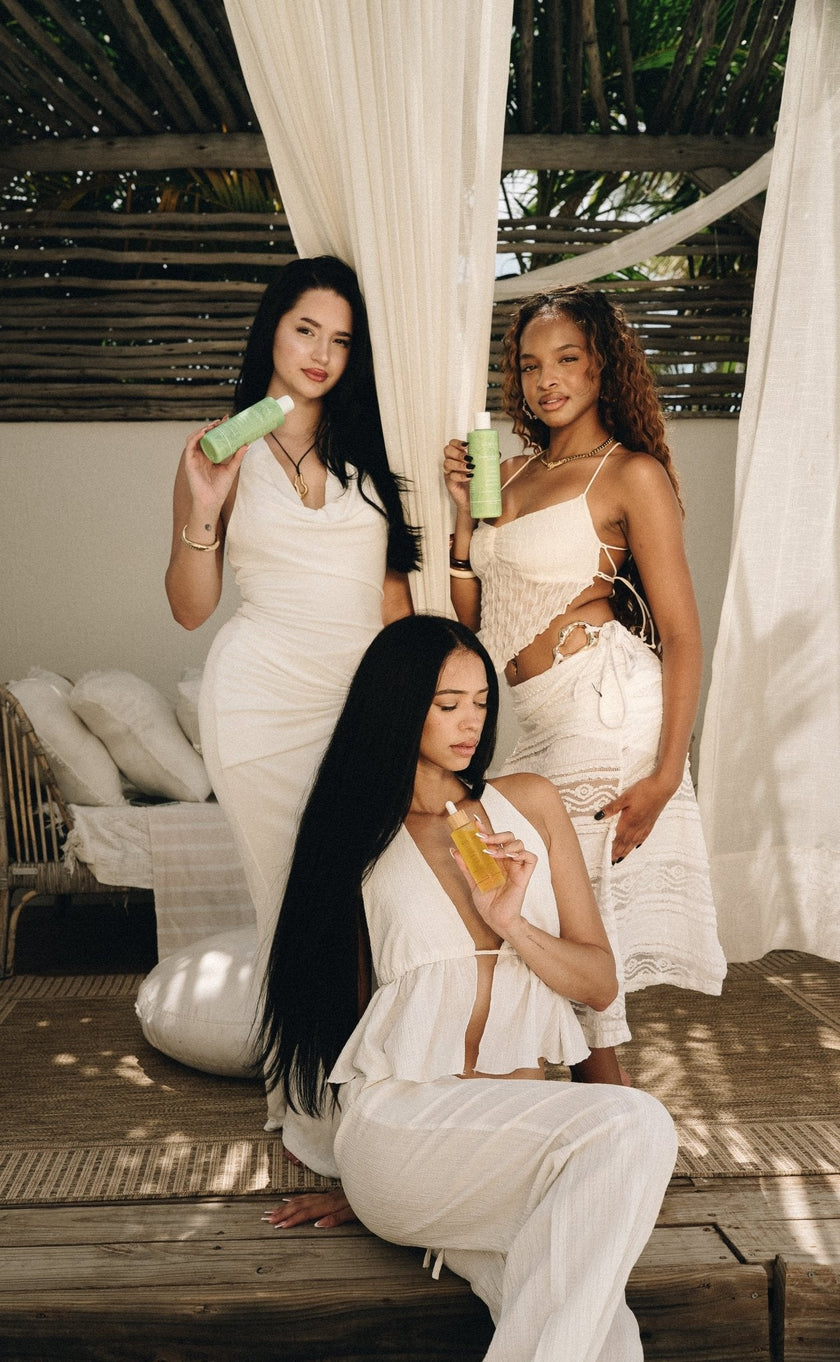
That is part of why the Nourish & Strengthen Conditioner is built with hydrolyzed keratin and hydrolyzed silk protein alongside shea butter and argan oil. Protein support helps hair hold up to the stress of a hot, bright season, and the same research that measured UV strength loss found hydrolyzed keratin helped hair keep its strength. We did not add it as a sunscreen, we added it for strength and slip, but it is a good example of choosing an ingredient for what the evidence shows it does, not just because it sounds nice on a label.
On the outside, we keep our oil light on purpose. Natural luxury does not mean heavy. It means a routine that feels good and works in real conditions, including an August afternoon.
What should you do after a day in the sun to repair hair?
After a long day outdoors, rinse first, then rehydrate. Get salt, chlorine, and sweat out of your hair with cool or lukewarm water as soon as you can, since letting them dry in keeps pulling moisture out overnight. Then follow with conditioner or a deep conditioning treatment to put moisture and softness back.
If you have been swimming, our guide on protecting hair from chlorine and salt water covers the rinse-and-replenish step in more detail. For hair that feels rough and dry after a stretch of sun, a longer conditioning session helps, and our deep conditioning routine walks through how to actually get results from it.
Sun and hair damage FAQ
Does hair need sunscreen or SPF?
Hair is not living tissue, so it cannot burn, but it still degrades under UV. There are UV-protectant hair sprays, but for most people a light barrier product plus physical cover like a hat does the job without adding a product step.
Can I use body sunscreen on my hair?
It is not made for it. Body sunscreen is heavy and greasy on hair and hard to wash out. If you want UV protection in a product, use one formulated for hair, and rely on a hat for the strongest protection.
Does wearing a hat actually protect your hair?
Yes, and it is the single most effective thing you can do. A hat or scarf physically blocks UV from reaching your hair and scalp, which no leave-in can fully replicate.
Is sun damage to hair reversible?
Partly. You cannot rebond broken keratin, but conditioning and protein treatments smooth the cuticle, restore moisture, and make damaged hair look and feel much better while it grows out. Trimming stressed ends helps too.
Does the sun damage your scalp too?
Yes. Your scalp is skin and can burn, especially along the part line. A hat protects it, and if you are out for a while, a sunscreen made for skin along your part is worth it.
How often should I protect my hair in summer?
Any day with real sun exposure. A few drops of oil on the ends and a hat before a beach day, a long walk, or an afternoon outside is enough, and most hair types do not need more than that.
Sun damage is mostly preventable, and it does not take a heavy routine to stay ahead of it. Keep your hair conditioned, add a light layer on your ends, cover up when the sun is strong, and rinse and rehydrate after a day out. Do that consistently through the summer and your hair holds onto its strength, softness, and color instead of paying for it in September.
New to a light summer routine? The Glow Kit has the shampoo, conditioner, and oil in one place, an easy way to keep hair sealed, strong, and protected all season.


)