

Rosemary Oil for Hair Growth: The Truth Behind the Trend
Rosemary oil blew up on TikTok in the last two years, and almost overnight every brand started slapping it on a label. Some of the hype is earned. Some of it isn't. This post separates what the research actually shows from what the algorithm is selling, so you can decide whether rosemary oil deserves a spot in your routine and how to use it without burning your scalp.
This is for anyone dealing with shedding, slow growth, thinning at the temples, or a stalled length journey, on any hair type.
The Short Answer: Does Rosemary Oil Actually Grow Hair?
Yes, the research is real, but the way most people use it is wrong. In a 2015 clinical trial, rosemary oil performed about as well as 2% minoxidil for androgenetic hair loss over six months. It works by improving scalp circulation and supporting follicle function. The catch: pure rosemary essential oil straight on the scalp can cause irritation, dryness, and even more shedding. It has to be diluted into a carrier oil to work safely.
What the Research Actually Says
The headline study is a 2015 clinical trial published in SKINmed (opens in a new tab) that compared rosemary essential oil to 2% minoxidil over six months on patients with androgenetic alopecia. Both groups saw significant hair count increases. The rosemary group had less scalp itching than the minoxidil group.
That's a real, peer-reviewed result. It's also one study, on one type of hair loss, at one dilution. It doesn't mean rosemary oil regrows every kind of hair, and it doesn't mean more is better.
A handful of smaller studies and reviews back up the mechanism: rosemary improves microcirculation at the scalp, has antioxidant activity, and may help reduce the conversion of testosterone to DHT, which is the hormone linked to pattern hair loss. The evidence is strongest for circulation and weakest for the DHT claim.
So rosemary oil has more research behind it than almost any other "trending" hair ingredient. That's why we use it. But the trend got ahead of the technique.
How Rosemary Oil Works on the Scalp
Three mechanisms matter:
1. Scalp circulation. Rosemary oil triggers a mild warming and stimulation effect on the scalp. More blood flow to a follicle means more oxygen and nutrients reaching the bulb where growth happens. This is the most well-supported benefit.
2. Antioxidant activity. Rosemary is rich in carnosic acid and rosmarinic acid, both strong antioxidants. Scalp inflammation and oxidative stress are part of why follicles slow down and miniaturize. Reducing that load supports a healthier growth cycle.
3. Anti-inflammatory and antimicrobial. A healthier scalp environment means less itch, less buildup, less dandruff. Less inflammation generally means better growth conditions, even if rosemary isn't directly making hair longer.
What rosemary oil does not do: it doesn't repair damaged strands, it doesn't moisturize, and it doesn't make hair grow faster on a healthy scalp that's already in good shape. It's a scalp ingredient, not a strand ingredient.
Why Pure Rosemary Oil Alone Isn't the Move
This is the part TikTok skipped.
Pure rosemary essential oil at full strength is a known irritant. Used undiluted, it can cause:
- Burning, redness, or stinging on the scalp
- Increased shedding from inflammation
- Dryness and flaking
- Allergic reactions in sensitive scalps
Safe use is 1 to 5 percent rosemary essential oil diluted into a carrier oil like jojoba, argan, or babassu. The clinical study used a similar low concentration, not pure oil.
The second problem with pure essential oil is texture. It's not moisturizing on its own. It evaporates. So even when people aren't getting irritated, they're not getting any of the conditioning, slip, or shine benefits a real oil treatment should give. They're using a stimulant without a carrier.
A formulated oil that pairs rosemary with the right carriers solves both problems: the dilution makes it safe, and the carriers give you actual hair benefits at the same time.
How to Use Rosemary Oil the Right Way
If you want rosemary in your routine, here's how to make it work:
- Use it diluted, always. A finished formula like a hair oil with rosemary at a safe percent, or DIY at 2 to 3 percent in jojoba or argan.
- Apply to the scalp, not the ends. This is a follicle ingredient. Massaging it into the lengths doesn't help much.
- Massage it in for 2 to 3 minutes. Pressure and circular motion matter more than time. Our full method is in the 3-minute scalp massage technique with hair oil.
- Use it 2 to 3 times a week, not daily. Daily isn't more effective, and it can dry out the scalp.
- Pair it with pre-wash. The pre-wash slot is the best time. The oil sits on the scalp for 20 to 60 minutes, then you wash. Full walkthrough: pre-wash oil treatment for natural hair.
- Don't expect overnight results. Hair grows about half an inch a month at most. Real change shows up at the three to six month mark, not in a single wash day.
If your scalp is already inflamed, itchy, or sore, fix that first before piling on stimulants. Rosemary on an irritated scalp can make things worse, not better.
Why Mimane Glow Put Rosemary in Growth & Strengthen Hair Oil
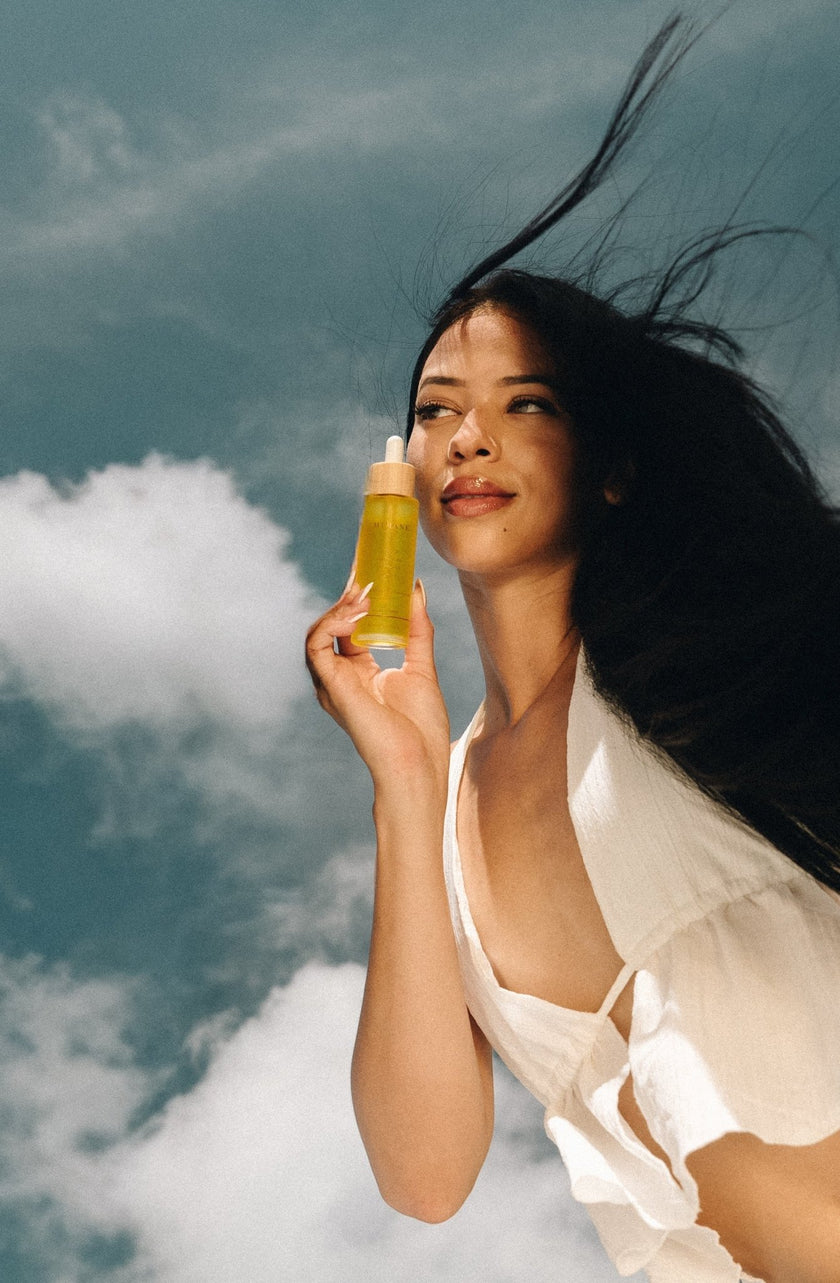
When we built the Growth & Strengthen Hair Oil, rosemary was one of the first decisions, and we chose it specifically because of the SKINmed data, not because it was trending. The trend is a coincidence, not the reason.
The formula pairs rosemary at a safe percentage with jojoba, argan, babassu, pumpkin seed, and squalane as carriers. That combination does the work pure rosemary can't do alone: the carriers absorb without weight, deliver the rosemary evenly across the scalp, and add slip, shine, and moisture to the strands while the rosemary works at the follicle level.
We also added lavender, which is calming, antimicrobial, and pairs well with rosemary in scalp formulas. There's more on lavender in our post on lavender oil benefits for hair.
Vitamin E and turmeric extract round out the antioxidant side. The whole oil is built to be a complete scalp-to-ends treatment, not a one-trick stimulant.
This is also why we built it color-safe. None of the carriers strip pigment, so people coloring their hair can still use a growth-supporting oil without losing tone. Full breakdown in the best hair oil for color-treated hair.
What to Expect and How Long It Takes
The most honest part of this post: rosemary oil works on a slow timeline.
Weeks 1 to 2: Scalp feels less itchy. Less flaking. Massages feel better than they used to. No visible growth yet.
Weeks 3 to 6: Shedding slows down for most people. Less hair in the shower. Baby hairs start to show at the hairline or part for some.
Months 2 to 3: New growth becomes visible. Edges fill in slightly. Density at the crown looks fuller. This is when most people decide whether they're going to stick with it.
Months 4 to 6: Real length change. This matches the timeline in the clinical study.
The people who quit at week four miss the actual results. Consistency is the whole game.
If you're starting from scratch and want the wash side handled too, the Glow Kit bundles the oil with our sulfate-free shampoo and conditioner, which keeps the scalp environment clean enough for the rosemary to do its job.
Rosemary oil isn't a miracle ingredient. It is a real one, with real research, that works when you use it right.