

Scalp Oiling vs Strand Oiling: What's the Difference and When to Do Each
Most people who oil their hair are doing one or the other without realizing there's a difference. Scalp oiling and strand oiling serve completely different purposes, work on different parts of your hair, and call for different techniques. If you've been oiling consistently but results feel uneven, this is worth reading. Whether your issue is a dry, tight scalp or brittle ends that snap off, here's how to use oil where it actually counts.
Scalp oiling means applying oil directly to the scalp to support circulation, reduce dryness, and maintain a healthy environment for growth. Strand oiling means applying oil along the hair shaft to seal in moisture, reduce breakage, and protect against damage. Both serve real purposes. Most hair types benefit from doing both, just at different times and with different techniques.
They're Not the Same Thing (and Mixing Them Up Wastes Product)
Here's the issue most people run into: they grab an oil, apply it from roots to ends in one pass, and call it done. That technique is not wrong exactly, but it's imprecise, and it often means neither the scalp nor the strands are actually getting what they need.
The scalp is skin. It has pores, sebaceous glands, and a circulatory system that responds directly to what you put on it. Oiling the scalp is closer to skincare than it is to hair care.
The strands themselves are dead protein. They don't absorb the way skin does, but the right oils can coat the cuticle, reduce friction, and lock in hydration from water or conditioner underneath. That's a completely different job than what's happening at the scalp.
When you lump both techniques together without intention, you often end up with greasy roots and under-oiled ends, or buildup that clogs the follicle over time. Separating the two in your mind makes every oiling session more effective.
What Scalp Oiling Actually Does
Scalp oiling is about the environment your hair grows from. A dry, tight, or inflamed scalp creates friction at the root level and contributes to shedding before the strand has a chance to grow out fully.
The main things scalp oiling addresses:
- Dryness and flaking at the roots
- Tightness or tenderness, especially after protective styles or tension
- Circulation to the follicle
- Dead skin cell buildup when combined with regular massage
The massage technique matters as much as the oil itself. Applying with fingertip pressure in small circular motions stimulates blood flow directly to the follicle. A 2015 study published on PubMed (opens in a new tab) found that rosemary oil performed comparably to minoxidil for stimulating hair growth, with scalp-level stimulation being a key mechanism. The oil is the carrier, but the movement is doing a significant portion of the work.
Lightweight oils perform best here. Heavy oils like castor or thick coconut oil can sit on the scalp surface and block follicles if you're not shampooing regularly enough to clear them. Jojoba oil is a better fit because its molecular structure closely mimics the scalp's natural sebum, which means it absorbs rather than piling up on the surface.
For a scalp care routine for natural hair, consistency matters more than volume. A small amount applied two to three times a week with a real massage technique will outperform a heavy monthly application every time.
What Strand Oiling Does and When Your Hair Needs It
Strand oiling is about protection and moisture retention along the length of the hair. The hair shaft is porous, and water-based moisture from your conditioner, a leave-in, or plain water evaporates quickly without something to slow that process down.
Oils that work well on the strand fill gaps in the cuticle and create a light barrier against humidity, friction, and heat damage. The result is softer-feeling hair, less frizz, and fewer split ends over time.
The best time to strand oil is after applying a water-based product while hair is still damp. Water or leave-in goes in first, oil goes on top to seal it in. The oil is not the moisturizer here — it's the seal over the moisture.
Strand oiling also works well as a pre-wash oil treatment for hair. Applying oil to dry strands before shampooing reduces the stripping effect of cleansing, so your hair holds onto more of its natural moisture through the wash. This is one of the clearest practical benefits of oiling, and it works across every hair type. If you've ever finished a wash day and immediately felt like your hair was dry again, this is usually the fix.
How to Tell Which One You Need Right Now
If your scalp feels tight, itchy, or flaky, or you're noticing more shedding than usual, scalp oiling is the priority. The problem is at the root, not the ends.
If your hair feels dry and brittle, breaks easily at mid-shaft or at the ends, or loses moisture within a day of washing, strand oiling is where to focus. Your cuticle needs sealing.
If both are happening at the same time, which is common, you don't have to choose. The techniques are different enough that they can both happen in a single session without getting in each other's way.
A few signs you've been over-oiling the scalp: roots that feel greasy and don't fully wash out, or a scalp that feels congested and itchy between wash days.
Signs you've been under-oiling the strands: hair that feels dry within 24 hours of washing, ends that snap off with minimal tension, or frizz that conditioner alone doesn't resolve.
Can You Do Both in the Same Routine?
Yes, and for most hair types this is the most efficient approach. You don't need two different sessions or two different products.
Here's how the timing works:
Pre-wash, on dry hair: Apply oil to both the scalp and the strands before shampooing. Section the hair, apply oil at the roots with fingertip pressure, then take what's left on your hands down the length of each section. Let it sit for 20 to 30 minutes, or up to an hour if your hair is very dry. Then rinse with the Nourish & Strengthen Shampoo to lift the oil cleanly without stripping the moisture underneath.
For more on how long to leave oil in hair before washing, and how pre-wash compares to an overnight treatment, the Hair Oiling 101 guide breaks down exactly when each method makes sense.
Post-wash, on damp hair: After conditioning, apply a small amount of oil to the strands to seal in moisture. Keep this away from the scalp since freshly washed hair doesn't need another scalp application right away, and adding oil directly to a clean scalp can shorten how long your roots feel fresh.
The pre-wash treatment stacks both benefits at once and doesn't add steps to the post-wash routine, which is why most people who try it stick with it.
Why Mimane Glow's Formula Works for Scalp and Strands
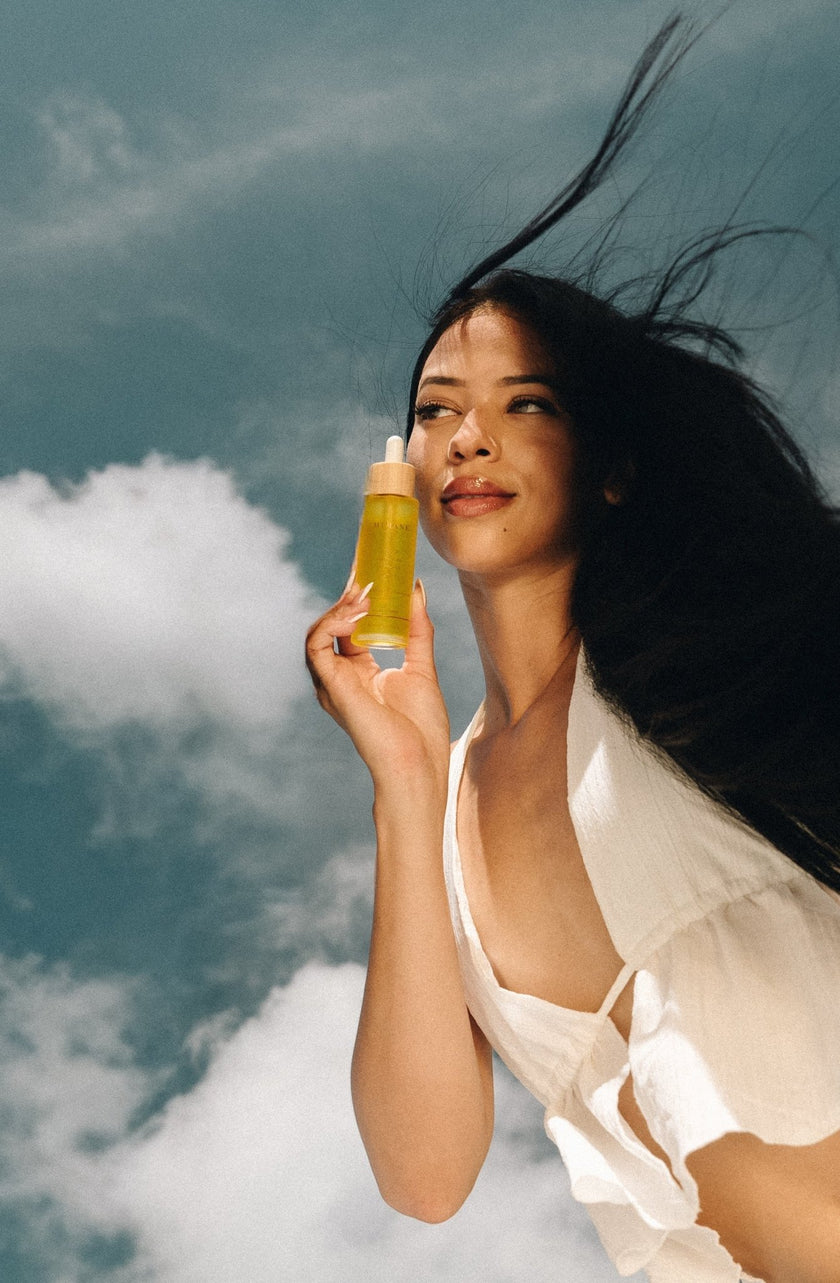
The Growth & Strengthen Hair Oil was built to work for both applications without needing to switch products between them.
Most single-ingredient oils are too heavy for scalp use or too light to protect the strand effectively. Straight castor oil, for example, is great for thickness at the scalp but will weigh down fine hair if applied mid-shaft. The formula balances this by blending oils that handle different jobs.
Jojoba oil handles the scalp side. Its sebum-like structure means the scalp absorbs it without triggering excess oil production in response. It goes in, does the work, and doesn't build up between washes.
Squalane handles the strand side. It's one of the lightest oils available, with a small enough molecular weight to penetrate the cuticle layer rather than just coat it. It adds softness and a light sheen without the greasy finish heavier oils leave on the hair shaft. That's why it's in the formula specifically, not as a filler.
Rosemary oil rounds out the blend for scalp circulation, which is where its research support is strongest. It's not in the formula for scent. It's in there because of what it does at the follicle level.
The result is one oil that you can apply to your scalp during a pre-wash treatment and also use on damp strands post-wash without reformulating or diluting anything.
The Simple Way to Do Both Without Overcomplicating It
If you want a routine that covers scalp oiling and strand oiling in one session, here's the straightforward version:
Once or twice a week, before shampooing:
- Section dry hair into four to six parts
- Apply three to four drops of oil to each section at the scalp, working in with fingertip circles for one to two minutes per section
- Take what's left on your hands and run it down the length of each section from mid-shaft to ends
- Gather hair loosely and let it sit for 20 to 30 minutes
- Shampoo, condition, and style as usual
That's a complete scalp oiling and strand oiling routine built into a single pre-wash step. Most people notice less shedding, softer ends, and better moisture retention within the first two or three wash days.
Xilenia does this before every wash day, applying the oil while she's getting ready and letting it sit before she gets in the shower. No separate time blocked off. Just part of the routine.
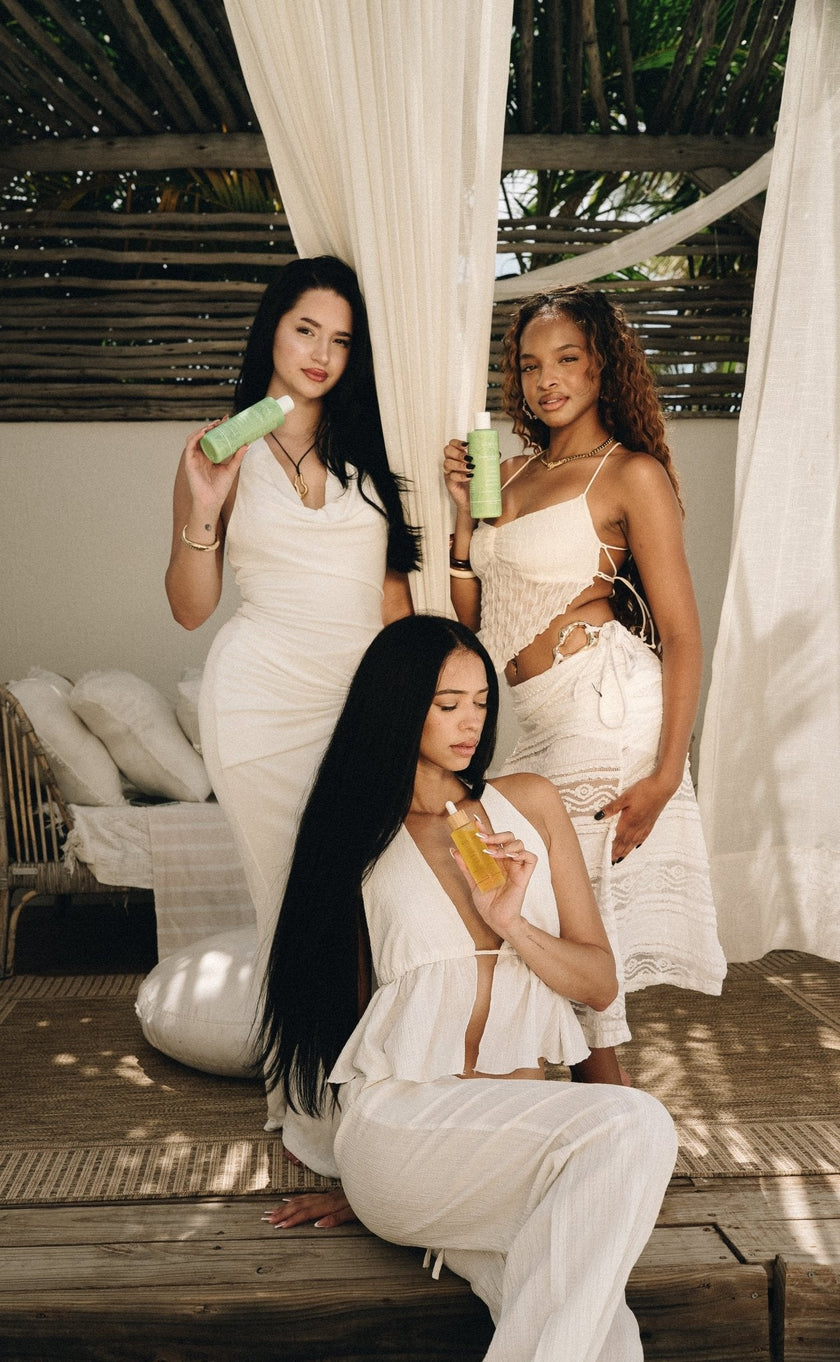
If you want the full wash-day setup alongside the oil, the Glow Kit has the oil, shampoo, and conditioner together. It's the easiest way to build the complete routine at once.