

If your brush is filling up faster than usual and you are finding more strands in the shower drain once the weather warms up, you are not imagining it. Summer really can bring on a heavier shed, and for most people it is a normal, temporary shift tied to how hair grows. This post explains what seasonal hair shedding in summer actually is, why it happens, how to tell it apart from breakage, and what you can do to keep your scalp and strands healthy while it passes. It is for anyone, any hair type, who notices more fall in the warmer months and wants to know whether to worry.
Yes, shedding more hair in summer is usually normal. Your follicles cycle through growing and resting phases, and more hairs shift into the resting phase during the summer months. Those hairs let go a little later, so you notice extra strands in your brush and drain. For most people it is seasonal, temporary, and not a sign that anything is wrong.
Is it normal to shed more hair in summer?
It is normal, and there is research behind it. Every hair on your head moves through a cycle: a long growth phase, a short transition, a resting phase, and then it sheds so a new hair can grow in its place. At any given time most of your hair is growing and a smaller share is resting. When more hairs rest at once, more shed a couple of months later.
Dermatologists generally consider losing 50 to 100 hairs a day to be typical. Summer can push you toward the higher end of that range, or a bit past it, without meaning anything is wrong. In a six-year study of 823 healthy women published in the journal Dermatology, researchers found the proportion of hairs in the resting (telogen) phase reached its annual peak in summer. Because resting hairs shed roughly two to three months later, a summer peak often shows up as heavier fall shedding too.
The takeaway: a warmer-weather uptick in shedding is a well-documented, seasonal pattern, not a personal failing or a product problem. It tends to settle on its own as the season turns.
What actually causes seasonal shedding?
The main driver is your hair's natural cycle syncing up with the seasons, but summer adds a few everyday stressors that can make the shed feel more noticeable. None of these are dramatic on their own. Together they explain why the warm months feel heavier.
- The hair cycle itself. More follicles enter the resting phase in summer, and those hairs release later. This is the biggest factor and the one you cannot control.
- Heat, sun, and sweat. UV exposure and constant sweating can leave the scalp irritated and strands drier and more fragile, which makes shed hairs and broken hairs pile up together.
- Chlorine and salt water. Pool and ocean days strip moisture and rough up the cuticle, so hair tangles and snaps more easily. That extra breakage often gets mistaken for shedding.
- Dehydration and diet shifts. Summer schedules, travel, and less consistent eating or hydration can nudge the cycle, though this tends to be minor and temporary.
If you spend a lot of time in the pool or the sea, the way you protect your hair matters. A little planning goes a long way, and it is worth reading up on how to protect your hair from chlorine and salt water before your next beach or pool day. A little sun and UV protection for hair helps on long outdoor days too.
Shedding or breakage: how do you tell the difference?
Shedding and breakage look similar in the drain but come from different places, and the fix is different too. Shedding is a whole hair leaving the follicle at the root, which is part of the natural cycle. Breakage is a hair snapping somewhere along the strand, which usually points to dryness, friction, or damage.
Here is the quick check. Look at the strands you are losing. A shed hair often has a small white or slightly bulb-shaped tip at one end, the root. A broken hair is shorter than the rest of your hair and has no bulb, just a blunt or frayed break. If you are seeing a lot of short, tip-less pieces, you are likely dealing with breakage, which responds to a gentler routine.
This distinction matters because seasonal shedding will pass on its own, while breakage is something your wash-day habits can actually improve. For a deeper walk-through, our guide on shedding vs breakage breaks down how to tell them apart, and why hair breaks off covers the most common causes and their fixes.
How can you support your hair through a summer shed?
You cannot stop your hair's natural cycle, and no product changes how much you seasonally shed. What you can do is keep your scalp comfortable and cut down on the breakage that stacks on top of the shed, so the hair that stays on your head looks and feels stronger. A calmer summer routine is mostly about being gentle and consistent.
Keep the scalp clean without stripping it
Sweat, sunscreen, and buildup collect faster in summer, so regular cleansing helps the scalp feel comfortable. The goal is to lift buildup without stripping, which is why a gentle, sulfate-free cleanser like the Nourish & Strengthen Shampoo is easier on a stressed summer scalp than a harsh, squeaky-clean formula. Focus the lather on your scalp and let it rinse through the lengths.
Protect strands from moisture loss
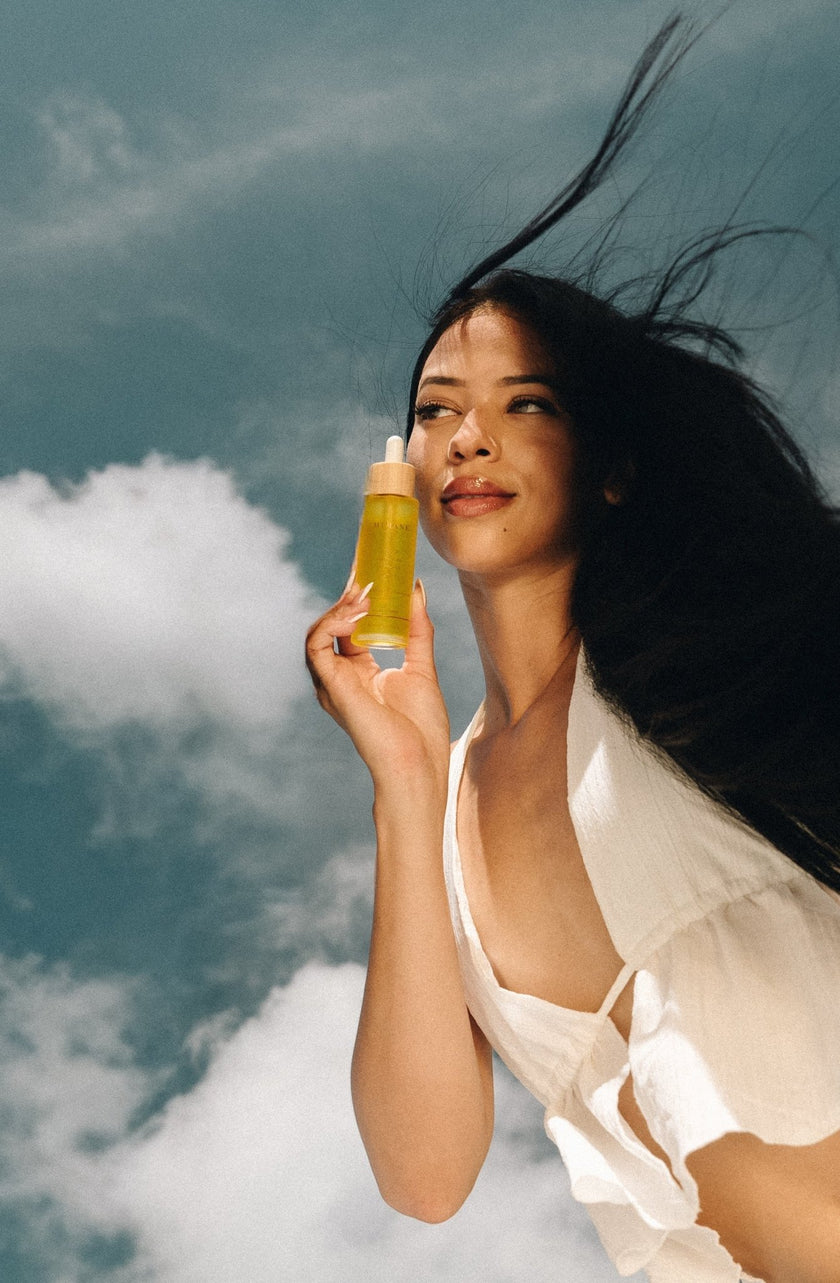
Drier strands snap more easily, so sealing in moisture reduces the breakage that makes a shed look worse. A lightweight oil used as a pre-wash treatment or a small finishing touch on the ends adds slip and shine without weighing hair down. A few drops of the Growth & Strengthen Hair Oil before you swim can also give strands a buffer against chlorine and salt.
Be gentle when hair is wet and fragile
Detangle with a wide-tooth comb or your fingers, work from the ends up, and skip tight styles that pull at the hairline. A short, unhurried scalp massage feels good and keeps you tuned in to how your scalp is doing. If your scalp is prone to sensitivity, our scalp care routine for natural hair lays out a simple, low-effort approach.
How Mimane Glow thinks about summer shedding
We are honest about what a routine can and cannot do. It cannot override your hair's seasonal cycle, and we will never tell you a bottle stops shedding. What a good routine can do is support the scalp and reduce breakage, so your hair looks fuller and healthier through the shed.
That is the thinking behind the ingredients we choose. We built the Growth & Strengthen Hair Oil around cold-pressed jojoba because jojoba's structure is close to the scalp's own sebum, so it absorbs and conditions without sitting heavy or greasy, which is exactly what you want on a hot day. We kept the shampoo sulfate-free on purpose, because gentle cleansing is the difference between a scalp that feels calm and one that feels tight and irritated in summer. These are formulation choices aimed at comfort and strength, not quick fixes.
When should you see a doctor about summer shedding?
Most seasonal shedding needs nothing more than patience and a gentle routine, but a few signs are worth a professional's eyes. See a dermatologist if the shedding is heavy for more than three months, if you notice widening parts, thinning patches, or a receding hairline, or if shedding comes with scalp pain, itching, redness, or flaking that will not settle.
It is also worth a check-in if a big life event lined up with the shed, since stress, illness, childbirth, rapid weight loss, or a new medication can trigger a longer shed called telogen effluvium. A doctor can rule out things like thyroid issues or low iron with a simple blood test. Getting answers early is always better than waiting and worrying.
Frequently asked questions
How long does seasonal shedding last?
Seasonal shedding usually lasts a few weeks to a couple of months and settles on its own as the season changes. If heavier shedding runs past three months, check in with a dermatologist.
How much hair loss is normal in a day?
Dermatologists generally consider 50 to 100 hairs a day typical, and summer can push you to the higher end without meaning anything is wrong. What matters more is a sudden, sustained change from your normal.
Does washing my hair more in summer make shedding worse?
No. Washing does not cause shedding, it just gathers the hairs that were already going to fall that day. Skipping washes can let buildup and sweat sit on the scalp, so a gentle regular cleanse is usually better.
Can hair oil stop summer shedding?
No product stops seasonal shedding, because it is driven by your hair's natural cycle. A lightweight oil can help with scalp comfort and reduce breakage, so what stays on your head looks and feels stronger.
Is summer shedding the same for every hair type?
The seasonal pattern shows up across hair types, but drier or more fragile hair may feel the breakage side of it more. The fix is the same: gentle cleansing, sealed-in moisture, and low-tension styling.
The bottom line on shedding more in summer
Seasonal hair shedding in summer is common, well-documented, and almost always temporary. Your hair is following its natural cycle, and the warm-weather stressors on top of it are ones you can manage with a gentle, consistent routine. Keep the scalp clean without stripping, seal in moisture to limit breakage, be soft with wet hair, and give it time to pass. If you want the full scalp-to-ends routine in one place, the Glow Kit is the easiest way to start.