

Your curls looked right when you left the bathroom. By the time you caught yourself in the car window there was a halo above the curl pattern, a fine layer of lifted hairs catching the light, and nothing about your routine had changed. Argan oil for curly hair frizz is the recommendation you will get from almost everyone, and it does work, but only if it goes on at the right moment and in a far smaller amount than most people use. Here is the timing, the dose, and the honest limits.
Argan oil calms curly hair frizz by smoothing the raised cuticle and slowing how quickly water moves in and out of the strand. Use three to four drops on damp, freshly conditioned hair before you style, then a single drop on dry ends later if the halo comes back. Applied to dry hair only, it mostly sits on the surface.
Why does curly hair frizz in the first place?
Frizz is your hair reacting to water in the air. Each strand is wrapped in overlapping cuticle scales, and when those scales sit flat the strand stays smooth and reflects light evenly. When they lift, humidity gets underneath, the inner cortex swells unevenly, and individual hairs bow out of formation instead of staying in the curl clump.
Curly and wavy hair frizzes more readily than straight hair for a structural reason. The cuticle cannot lie perfectly flat around a bend, so every curve in the strand is a place where the scales are already slightly raised. More bends means more entry points, which is why the same humid morning that leaves straight hair fine turns a wash-and-go into a cloud by noon.
The other half of frizz is mechanical, and it is the half people underestimate. Rubbing hair with a terry towel, brushing it dry, and eight hours of friction against a cotton pillowcase all lift cuticle scales that were sitting flat. Oil cannot undo that damage retroactively, though it does make the surface harder to rough up in the first place.
Does argan oil actually stop frizz, or just coat the hair?
It coats, and for frizz, coating is the correct answer. Argan oil is dominated by oleic acid, a large monounsaturated fatty acid that spreads along the outside of the strand rather than pushing deep into the cortex the way small lauric-acid oils do. That surface film fills in the gaps between lifted cuticle scales, cuts the friction between neighboring hairs, and slows the rate at which humidity gets in.
Argan oil is a surface fix, and a surface fix is exactly what frizz needs. Frizz is not a deficiency inside the strand that you can top up. It is a problem at the boundary between your hair and the air, so the useful intervention happens at the boundary.
This is also why argan behaves differently from jojoba in a routine even though both get called "hair oils" in the same breath. Jojoba is closer in structure to the scalp's own sebum and absorbs faster, while argan lingers longer on the surface and gives more visible smoothing. We broke the two down side by side in jojoba oil vs argan oil for hair, and for pure frizz control argan is the one doing the smoothing work.
When in your routine should argan oil go on?
On damp hair, right after you rinse out conditioner and before any styler. Damp hair has a cuticle that is softened and slightly swollen, so the oil settles into the surface as the strand dries down and contracts, sealing the water that is already inside instead of locking it out.
Dry hair is the wrong canvas. Every time. Oil applied to fully dry curls has nothing to seal, so it sits on top, weighs down the clumps, and reads as greasy long before it reads as smooth. The one exception is a single-drop touch-up on an afternoon halo, which is a correction rather than an application.
The sequence that works for most curly and wavy hair looks like this. Rinse conditioner, squeeze out the excess water with a microfiber towel or a cotton t-shirt so hair is damp rather than dripping, warm the oil between your palms, then press it through the mid-lengths and ends. Leave-in, gel, or cream goes on after. Diffuse or air-dry without touching your hair while it sets, because touching wet curls as they dry breaks the clumps and creates the exact halo you are trying to prevent.
Argan oil also works as a pre-wash treatment, applied thirty minutes to a few hours before you shampoo, which is a gentler way to get the benefit on fine hair that cannot carry a leave-in dose. We walked through that version of the routine in how to use hair oil for frizz without weighing hair down.
How much argan oil does curly hair actually need?
Three to four drops for shoulder-length curly hair, two for fine or wavy hair, five or six for very thick or long hair. Warm it between your palms first so it spreads as a film rather than landing in one loaded spot, then scrunch upward into the mid-lengths and ends. Skip the roots entirely.
If you are reaching for more than four or five drops, you are using oil as a styler, and it will look like it. Oil does not add moisture, it holds moisture in, so a bigger dose on hair that went into the shower dry gives you weighed-down curls that are still frizzy underneath. Hair that stays thirsty between washes needs the conditioning step fixed first, which is the ground we covered in how to keep curly hair moisturized between wash days.
For the halo that shows up mid-afternoon, warm a single drop between your fingertips until you can barely feel it, then smooth it over the surface of the hair without digging into the clumps. One drop. Anything more and you are re-styling, not touching up.
What does the research say about argan oil on damaged hair?
The strongest lab evidence for argan oil is about protecting the strand's protein rather than reshaping it. In a 2022 study in the Journal of Cosmetic Dermatology, Sharifi, Hamedeyazdan, Shokri and Monajjemzadeh took human hair tresses and split them into three groups: one damaged by an oxidizing agent alone, and two pre-treated with argan oil before the same oxidative exposure, differing in whether the oil was removed by physical cleaning or by a full washing procedure. Protein loss was measured with the Lowry method, and both argan-pretreated groups lost significantly less protein than the untreated group (Sharifi et al., 2022, via PubMed).
Two details from that paper matter for frizz specifically. The infrared spectra showed argan oil still detectable on the hair after washing, which is the mechanism behind why a pre-wash treatment does anything at all. And protein loss is upstream of frizz: a cuticle that has been stripped of protein sits looser and lifts more easily, so the strand that loses less protein is the strand that behaves better in humidity three months from now.
Worth being straight about the limits. This was hair tresses in a lab, not people living through a Miami August, and it measured protein loss rather than frizz. It tells you the protective effect is real and measurable. It does not tell you how your specific curls will look on a rainy Tuesday.
Why Mimane Glow blends argan oil instead of bottling it alone
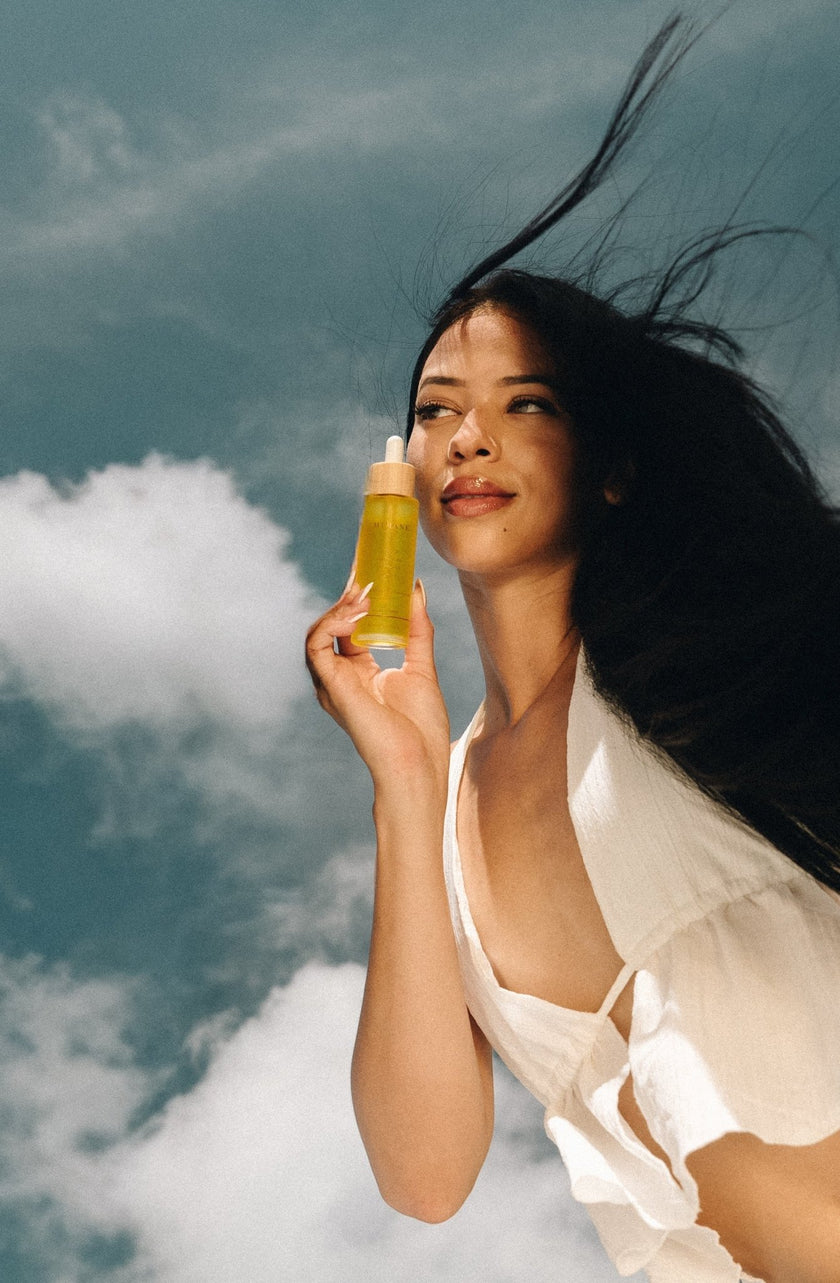
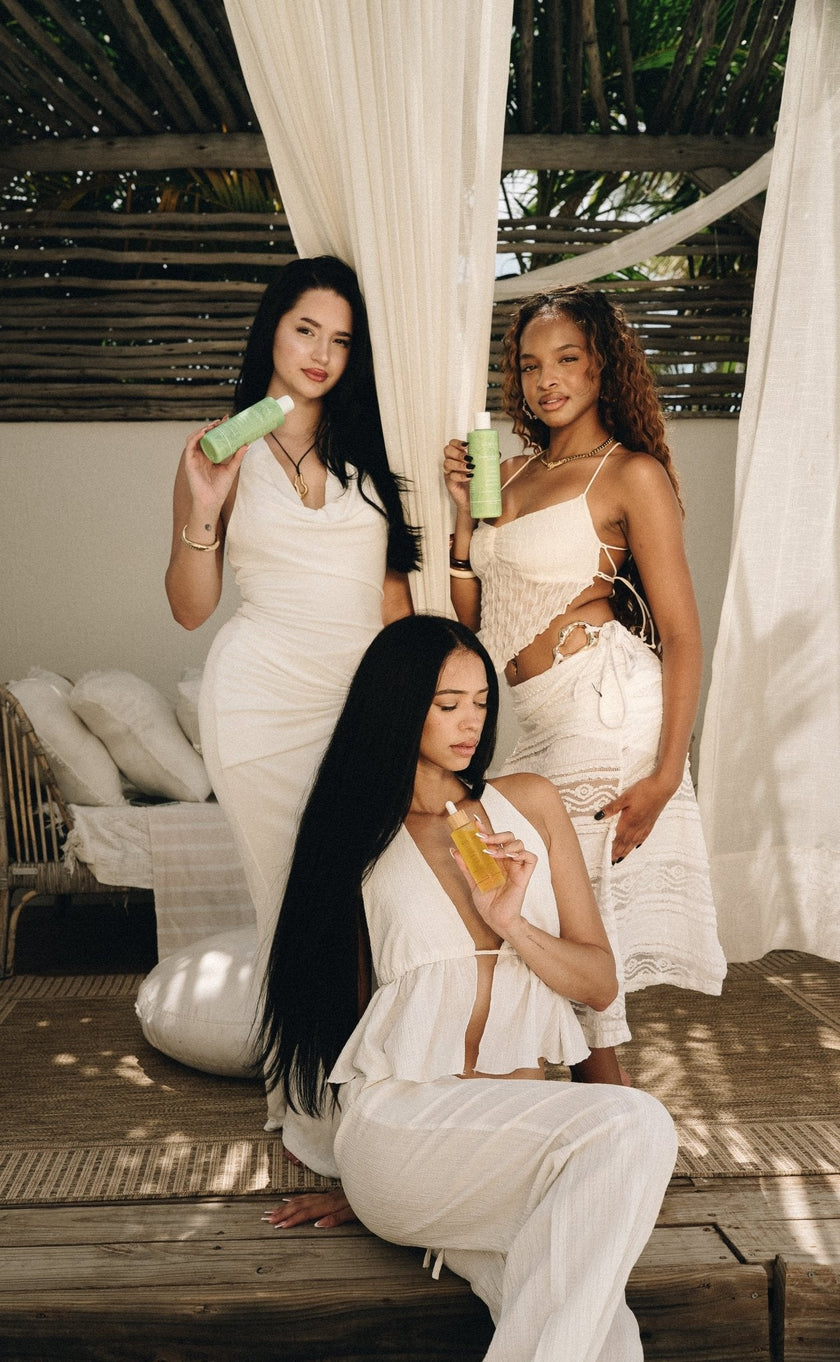
Argan is the second ingredient in the Growth & Strengthen Hair Oil, sitting behind jojoba in the Glow Complex alongside babassu, pumpkin seed, squalane, turmeric extract, rosemary, lavender and vitamin E. It is also in the Nourish & Strengthen Conditioner, where it does its smoothing work in the shower while the cuticle is at its most open.
We blended rather than bottling argan on its own for a practical reason: straight argan is excellent at smoothing and mediocre at absorbing, so on fine or loose curls it can go from sleek to heavy within a couple of hours. Pairing it with jojoba and squalane, which sink in fast, means the blend disappears into the hair while argan stays where you need it, on the surface. That balance is the whole reason the blend exists.
Here is what we tell every customer who asks whether they should just buy pure argan oil instead: read the ingredient list on whatever you are comparing. Plenty of bottles sold as argan oil treatments list two silicones ahead of the argan, which means the smoothing you feel is mostly silicone film. Ours is sulfate-free, silicone-free and mineral-oil-free, so what smooths your hair is the oil you paid for. If your hair is color-treated, argan is one of the safer oils to layer in, which we covered in is argan oil safe for color-treated hair.
What will argan oil not fix?
No oil out-argues a humid day forever, and any product promising otherwise is selling you a silicone. Argan buys you hours, not immunity, and on a genuinely wet day you will still see some lift by evening.
Three other frizz sources sit outside what oil can reach. Heat damage from daily flat ironing permanently breaks the cuticle, and a broken cuticle cannot be smoothed back into place. A protein and moisture imbalance produces frizz that feels either straw-stiff or limp and mushy, and adding oil to either one makes it worse rather than better, which is why telling protein from moisture is worth doing before you troubleshoot anything else. And hard water leaves mineral deposits that hold the cuticle open no matter what you put on top.
Argan oil is a finishing and protecting step. When frizz is being generated upstream by damage, imbalance, or your water, the oil is doing its job and the problem is somewhere else.
Frequently asked questions
Can I use argan oil on curly hair every day?
Yes, at a drop or two on dry ends for touch-ups. The full damp-hair dose belongs on wash days, because applying a styling amount daily builds up and dulls curl definition within about a week.
Will argan oil make my curls limp or lose definition?
Only if you overdose it or apply to soaking-wet hair. Squeeze hair to damp first and stay at three or four drops, and definition improves rather than drops, because smoother strands clump together more tightly.
Is argan oil good for low porosity curls?
It works, but timing matters more. Low porosity hair takes longer to accept anything, so apply argan to warm, damp hair straight out of the shower and give it a few extra minutes before adding stylers on top.
Can I put argan oil on my scalp for frizz?
There is no reason to. Frizz happens along the strand, not at the root, and oil at the scalp mostly makes hair look greasy at the top while the ends stay unaddressed.
How long before I see less frizz?
The smoothing shows up the same wash day, within an hour of drying. The deeper benefit, less protein loss and a cuticle that stays flatter on its own, builds over roughly six to eight weeks of consistent use.
Does argan oil work on all curl patterns?
It works across wavy, curly and coily hair, with the dose scaling to density and length. Fine waves need two drops, thick coily hair may need six, and the application method stays the same.
The bottom line on argan oil for curly hair frizz
Argan oil handles curly hair frizz at the surface, where frizz actually happens, as long as you put it on damp hair and keep the dose to a few drops. Fix the conditioning step first, apply before your styler, resist touching your curls while they dry, and save one drop for the afternoon halo. If you want the smoothing working at both ends of wash day, the Glow Kit pairs the oil with the sulfate-free cleanse and the argan-containing conditioner that set it up.