


Dry natural hair that still feels rough after you rinse out conditioner is usually a formula problem, not a you problem. The right conditioner puts moisture back, smooths the cuticle, and helps your hair hold that softness until the next wash. This guide breaks down what to look for on a conditioner label for dry natural hair, what to skip, and how to use it so it actually works. It is written for anyone with dry, thirsty, or textured hair across most hair types.
The best conditioner for dry natural hair pairs humectants that pull in water (glycerin, aloe, panthenol) with emollients that seal it in (shea butter, argan and babassu oils) and a cationic detangling agent like behentrimonium methosulfate for slip. Skip drying alcohols, heavy silicones, and mineral oil, which sit on the surface and block moisture.
What makes a conditioner good for dry natural hair?
A good conditioner for dry hair does three jobs at once: it attracts water into the strand, seals that water in, and lays the cuticle flat so hair feels smooth instead of rough. Dry and textured hair loses moisture faster because the cuticle sits more open along the strand, so the sealing step matters more than it does for straight, oily hair.
Human hair can take on up to roughly 30 percent of its weight in water when it is fully wet, which is exactly the window a conditioner works in. A peer-reviewed overview of hair cosmetics in the International Journal of Trichology describes how conditioners built on cationic (positively charged) agents deposit on the most damaged, negatively charged parts of the cuticle, which is where they reduce friction, improve combing, and cut static. That is why a real conditioner does more than a rinse of water ever could.
So when you read a label, you are really looking for one ingredient from each of three groups: something that holds water, something that seals it, and something that smooths and detangles. When a formula covers all three, dry hair stays soft past the shower instead of tightening up as it dries.
Porosity changes how much of each you need. High-porosity hair, common after color or heat, drinks in moisture fast but loses it just as quickly, so the sealing emollients matter most. Low-porosity hair resists letting product in, so lighter formulas and warm water help the conditioner absorb instead of sitting on top. Knowing which way your hair leans tells you whether to reach for a richer conditioner or a lighter one.
What ingredients should a conditioner for dry natural hair have?
Look for humectants, emollients, a cationic conditioning agent, and a measured amount of protein. Those four categories are what separate a conditioner that actually rehydrates dry hair from one that just smells nice for a minute.
Humectants that pull in water
Glycerin, aloe vera juice, and panthenol (pro-vitamin B5) draw moisture into the strand and help hold it there. On dry natural hair these are the difference between hair that feels soft while wet and hair that stays soft once it dries. Aloe vera juice high on an ingredient list is a good sign, because ingredients are listed in order of how much is in the bottle.
Emollients that seal moisture in
Shea butter and lightweight plant oils like argan, babassu, and pumpkin seed coat the strand and slow water loss. They are what give dry ends a smooth, sealed finish instead of a papery one. For finer hair, lighter oils matter here so the seal does not turn into weight.
A cationic conditioning agent for slip and detangling
Behentrimonium methosulfate, usually shortened to BTMS, is the ingredient that gives real slip and lets you finger-detangle without tearing. Despite the name, it is a gentle, plant-derived conditioning agent, not a sulfate cleanser. Fatty alcohols like cetearyl alcohol and cetyl alcohol work alongside it to soften and thicken the formula. These are the good kind of alcohol, not the drying kind.
Protein, in balance
Small amounts of hydrolyzed keratin or silk protein help reinforce strands that feel weak and stretchy, which supports less breakage on fragile dry hair. The word to watch is balance. Protein without enough moisture beside it can leave dry hair stiff, so you want a formula that pairs the two rather than leaning hard on protein alone. If you are not sure which your hair needs, our guide on protein versus moisture walks through how to tell.
What should you skip in a conditioner for dry hair?
Skip ingredients that coat the strand or pull water out of it: drying alcohols, heavy silicones, mineral oil, and synthetic fragrance. On dry natural hair these are the most common reasons a conditioner leaves hair feeling rough, dull, or coated over time.
- Drying alcohols. Short-chain alcohols like alcohol denat, SD alcohol, and isopropyl alcohol evaporate fast and take moisture with them. This is where the label gets confusing, since fatty alcohols like cetearyl are moisturizing and completely fine. Learn the two apart and you can read past the scary-sounding word.
- Heavy silicones. Ingredients like dimethicone give a slick feel in the shower but can build up on porous, dry hair and block the next round of moisture from getting in. A conditioner that relies on oils and butters for slip gives you softness without the buildup cycle.
- Mineral oil and petrolatum. These sit on the surface and seal, but they do not add any moisture of their own, so dry hair underneath can stay dry.
- Synthetic fragrance. Added parfum can irritate a sensitive or dry scalp. A light scent from essential oils does the same job without the same risk.
One more thing to skip: a conditioner that is all protein and no moisture. On already-dry hair, too much protein with nothing to soften it can tip into stiffness and breakage, which is the opposite of what you want.
How often should you condition dry natural hair?
Condition every single time you wash. Dry and textured hair does not make or hold its own oils well, so skipping conditioner to save time almost always leaves hair rougher and harder to detangle. There is no benefit to under-conditioning dry hair.
Once a week, step it up with a longer, richer treatment. A weekly deep conditioning session gives dry hair the extended contact time it needs to fully soften, and our deep conditioning routine for natural hair lays out how to do it without wasting product or time. Everyday conditioner plus a weekly deep treatment is the rhythm that keeps dry hair comfortable.
How should you apply conditioner so dry hair holds the moisture?
Apply conditioner to damp, not dripping, hair and focus it on the mid-lengths and ends where hair is oldest and driest. Squeeze out excess water first so the conditioner is not just sliding off a wet coating. This is the single biggest fix for hair that feels dry right after washing.
Work it through with your fingers or a wide-tooth comb to spread it evenly and detangle at the same time. Give it two to three minutes while you finish the rest of your shower, then rinse with cooler water to help the cuticle lie flat and lock in slip. If you want the full method, our two-minute shower detangle method shows it step by step. And if your hair still feels dry even when you are doing all this, it is worth checking the real reasons hair stays dry after washing, because sometimes it is the water or the shampoo, not the conditioner.
Why Mimane Glow built the Nourish & Strengthen Conditioner for dry hair
We built the Nourish & Strengthen Conditioner around the exact three-part logic above, because dry hair needs all three jobs covered in one step. Water is the first ingredient and aloe vera juice sits right behind it at the top of the formula, so the humectant load is real, not a trace at the bottom of the label.
For sealing, we chose shea butter with babassu, argan, and pumpkin seed oils, which soften and smooth without the heavy, coated feel. For slip and detangling we use behentrimonium methosulfate with cetearyl and cetyl alcohol, so hair combs through easily on wash day. Hydrolyzed keratin and silk protein sit alongside panthenol and niacinamide to support strength and less breakage while keeping the moisture balance in check.
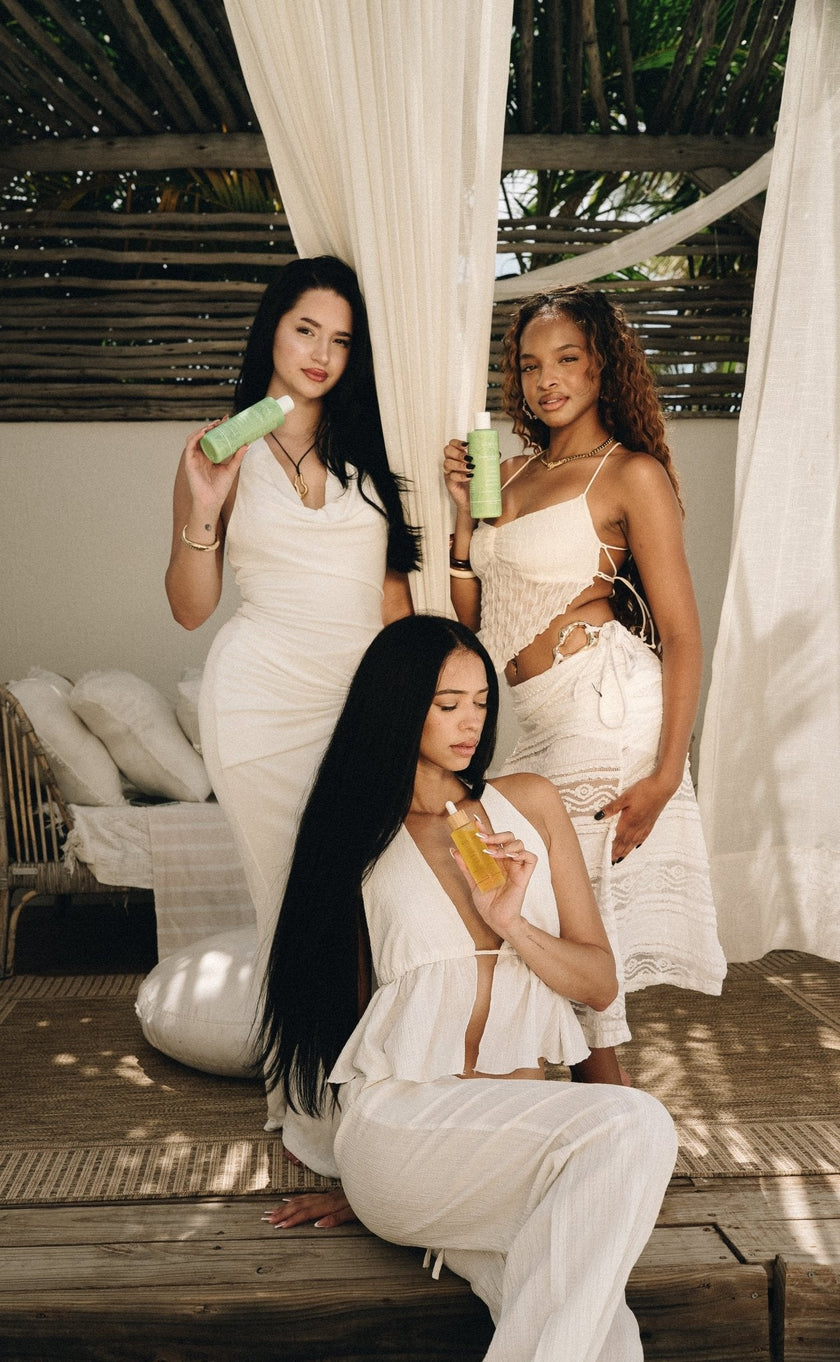
It is sulfate-free, silicone-free, and mineral-oil-free, with a light scent from lavender oil rather than synthetic fragrance. If you want the matching cleanser too, the Nourish & Strengthen Duo pairs it with our shampoo so your whole wash day works toward the same result.
Frequently asked questions
Can I use conditioner on dry natural hair every day?
Yes, if you are washing daily, condition every time. Most people with dry or textured hair wash less often than that, and on non-wash days a little conditioner smoothed onto dry ends can refresh moisture without a full rinse.
Is a regular conditioner enough, or do I need a deep conditioner too?
A good rinse-out conditioner handles daily wash-day moisture and detangling. For very dry or damaged hair, add a weekly deep treatment for the longer contact time your strands need to fully soften.
Will a rich conditioner make fine or low-porosity hair greasy?
It can if you apply it root to tip or pick a very heavy formula. Keep conditioner on the mid-lengths and ends, rinse well, and choose one built on lighter oils so fine hair stays soft without going flat.
Can I leave my rinse-out conditioner in as a leave-in?
It is best rinsed out, since rinse-out formulas are designed to be removed and can feel heavy or sticky if left on. Use a product made as a leave-in for that step instead.
Is a sulfate-free conditioner safe for color-treated hair?
Yes. Sulfate-free, silicone-free formulas are gentle on color and help dry, color-treated hair hold moisture between washes without stripping tone.
Does dry hair need protein or moisture?
Most dry hair needs moisture first, with a smaller amount of protein for strength. A conditioner that balances both, rather than overloading on protein, is the safest choice for everyday use.
The takeaway
The best conditioner for dry natural hair comes down to one thing: a formula that holds water, seals it in, and smooths the cuticle, with drying alcohols, heavy silicones, and mineral oil left out so they cannot undo the work. Read the label for that combination and your dry hair will hold its softness far longer.
If you want a conditioner already built that way, the Nourish & Strengthen Duo is the easiest place to start your next wash day.
The rest of the routine, shampoo and oil included, lives in the wash-day essentials collection.


)