


Jojoba Oil Benefits for Hair: What It Actually Does (And Why It Works for Most Hair Types)
Jojoba oil shows up on almost every hair-care label, but most posts never explain what it does differently from the dozen other oils next to it. The short version: jojoba behaves less like an oil and more like the sebum your scalp already makes. That one fact is why it absorbs cleanly instead of sitting on top of your strands. This post covers what jojoba oil does for hair, who it works for, and how to actually use it. It's written for anyone trying to figure out whether jojoba belongs in their routine, across straight, wavy, curly, and textured hair.
What does jojoba oil do for hair? Jojoba oil is a liquid wax ester that closely matches the structure of your scalp's natural sebum. Because of that, it absorbs into the hair and scalp rather than coating the surface. It softens strands, smooths the cuticle for less frizz and easier detangling, supports a balanced scalp, and seals in moisture without the greasy weight of heavier oils.
What does jojoba oil actually do for hair?
Jojoba oil softens, smooths, and seals without weighing hair down. It coats each strand in a thin, even layer that flattens the cuticle, which is what gives you less frizz, more shine, and easier detangling on wash day.
It also helps hair hold onto moisture. Jojoba doesn't add water to your hair, it slows how fast water leaves, so the hydration from your conditioner or leave-in lasts longer between washes. That matters most for hair that dries out fast or feels rough by day two.
On the scalp, jojoba sits well because it's close to what your scalp produces on its own. It can help a tight or flaky scalp feel more comfortable without clogging things up. The reason all of this works comes down to one unusual fact about jojoba, which is worth understanding before you buy anything.
Is jojoba oil really like your scalp's natural oil?
Yes, and this is the single most important thing about it. Jojoba is not technically an oil at all. It's a liquid wax ester, and its chemical structure is closer to human sebum (the oil your scalp naturally makes) than any other plant-based ingredient used in hair care.
This is the difference between jojoba and oils like coconut or olive. Heavier oils are made of triglycerides, which are larger and tend to sit on top of the hair or scalp. Jojoba's wax-ester structure lets it blend in with your own sebum instead of fighting it. Your scalp reads it as familiar.
A 2013 dermatology review of jojoba (Pazyar et al., published in Giornale Italiano di Dermatologia e Venereologia (opens in a new tab), indexed on PubMed) documents that jojoba is composed almost entirely of wax esters structurally similar to human sebum, and notes its anti-inflammatory and skin-barrier-supporting properties. That sebum-mimicking structure is exactly why jojoba behaves so differently from a standard carrier oil on hair and scalp.
Does jojoba oil work for curly and textured hair?
Jojoba oil works well for curly and textured hair, and it's one of the more forgiving oils across hair types. Curly and coily hair tends to be drier along the length because natural scalp oils struggle to travel down a bent strand. A light, absorbing oil like jojoba helps fill that gap without the buildup heavier oils can leave in tight curls.
For looser waves and finer textures, jojoba is a safer pick than most oils because it doesn't flatten volume or leave a greasy film. You get the slip and shine without the weigh-down.
The honest caveat: very thick, coarse, or high-density hair may want jojoba paired with a richer ingredient like shea butter or babassu for extra sealing power. Jojoba is the lightweight workhorse, not always the heaviest sealer in the routine. If you're curly and figuring out absorption, our guide on low porosity hair and hair oil breaks down how to get any oil to actually sink in.
How do you use jojoba oil in a wash-day routine?
The easiest place to use jojoba oil is as a pre-wash treatment, before you shampoo. Here's the simple version:
- Section dry or slightly damp hair into two to four parts so you can reach the scalp.
- Warm a few drops to a pump or two between your palms, depending on length and density.
- Massage into the scalp first, then smooth the rest down the length and especially onto the ends, which are the oldest and driest part of your hair.
- Let it sit 20 to 30 minutes (or overnight if you want a deeper treatment), then shampoo and condition as normal.
You can also use a small amount on dry hair as a finishing step, pressing it onto mid-lengths and ends to smooth frizz and add shine. Start with less than you think you need. For the full breakdown of when to leave it short versus overnight, see Hair Oiling 101: Pre-Wash vs Overnight.
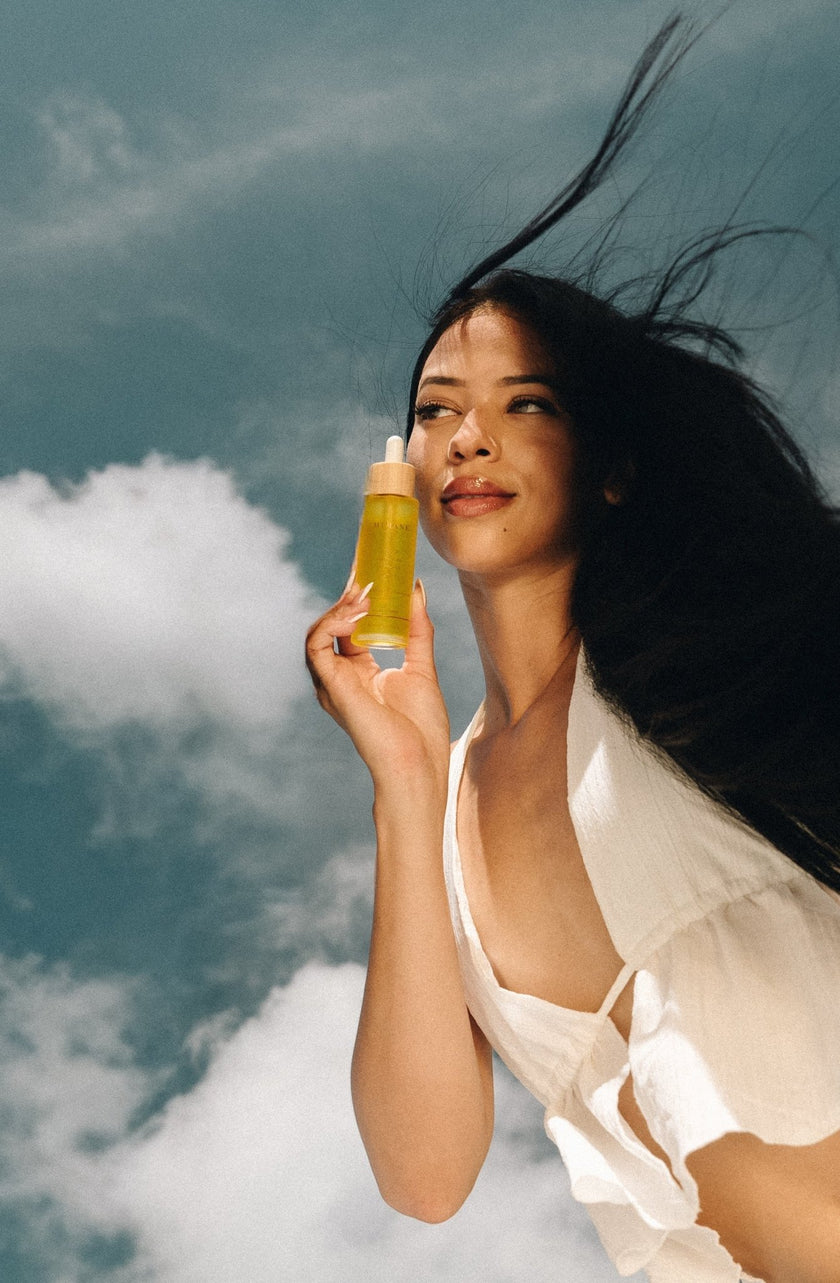
Why Mimane Glow built the Growth & Strengthen Hair Oil around jojoba
We chose jojoba as a lead ingredient in the Growth & Strengthen Hair Oil specifically because of how it absorbs. We wanted an oil that works from scalp to ends without leaving hair greasy or flat, and a sebum-mimicking wax ester was the most reliable way to get there across different hair types.
It isn't working alone. Jojoba is paired with babassu and pumpkin seed oil for lightweight sealing, argan and squalane for slip and shine, and rosemary for the scalp. Jojoba is the part that makes the whole blend feel like it disappears into the hair instead of sitting on it. That was a formulation decision, not a trend pick. We built the blend around absorption first.
If you're weighing jojoba vs argan oil for your own routine, we compared the two head to head.
Can jojoba oil weigh hair down or cause buildup?
Jojoba oil is one of the least likely oils to weigh hair down or cause buildup, because it absorbs rather than coating the surface. The problem is almost always the amount used, not the oil itself. Two pumps of a jojoba-based oil on fine hair will sit lighter than a single drop of a heavy butter.
If hair feels greasy after using jojoba, scale the amount back and keep it on the mid-lengths and ends rather than saturating the roots. On wash day, a clarifying-but-gentle cleanse clears any residue. Used in normal amounts, jojoba rinses clean and doesn't accumulate the way heavier, slower-absorbing oils can.
FAQ
Is jojoba oil safe for color-treated hair? Yes. Jojoba is free of harsh solvents and won't strip color. Used as a pre-wash treatment or a light finishing oil, it actually helps smooth the cuticle, which can keep color-treated hair looking less dull.
How often should you use jojoba oil on your hair? Most people use it once or twice a week as a pre-wash treatment. If you're using it as a finishing oil on dry ends, a tiny amount every few days is fine. Frequency depends on how dry your hair runs.
Can jojoba oil help with hair growth? Jojoba supports a healthier scalp environment and reduces breakage by keeping strands conditioned, which helps you retain the length you grow. It is not a guaranteed growth treatment, and no topical oil makes hair grow faster on its own.
Does jojoba oil work for low porosity hair? Yes, and it's one of the better choices. Low porosity hair resists heavier oils, but jojoba's light, sebum-like structure absorbs more easily, especially when applied to slightly warm or damp hair so the cuticle is open.
Is jojoba oil good for an oily scalp? It can be. Because jojoba resembles your scalp's own sebum, it can help signal a balanced oil level rather than adding heavy grease. Use a small amount at the scalp and rinse well on wash day.
If you want to put jojoba to work, the Growth & Strengthen Hair Oil is the easiest place to start. Use it as a pre-wash treatment this week, give it three or four wash days, and watch for softer strands and easier detangling. Consistency is the part that actually matters.


)